
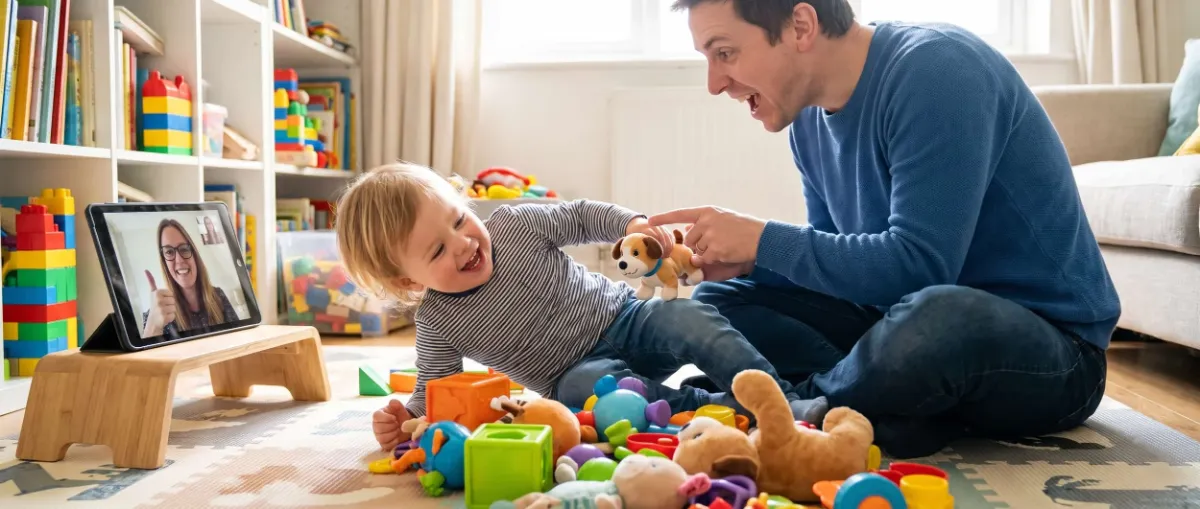
You are your child’s first and most important language teacher. That can feel like a lot of pressure, but here’s the good news: you don’t need special toys, apps, or flashcards. The everyday moments you already share are the best language lessons there are.
Whether your child is waiting for an evaluation, already in speech therapy, or you just want to give them a strong start, these 10 simple ideas show you how to encourage your toddler to talk and build language at home.
At home
10 easy ways to help your toddler talk
Why Home Practice Matters So Much
A speech therapy session lasts 25 to 30 minutes, once or twice a week. Your child spends the rest of their waking hours with you. That’s where new words and skills really take hold.
Speech-language pathologists often say that therapy teaches the skill, and home practice makes it stick. The tips below fit into routines you already have, like meals, bath time, car rides, and bedtime.
1. Narrate Your Day Out Loud
Talk about what you’re doing as you do it. “I’m cutting the apple. Crunch! Now I’m putting it on your plate.” This is sometimes called self-talk.
You can do the same with what your child is doing: “You’re stacking the blocks. One, two, three. Uh oh, they fell!” Hearing words matched to real actions helps children connect language to meaning.
2. Read Together Every Day, and Ask Questions
Reading is one of the best language development activities, even for babies. You don’t have to read every word. Point to pictures, name them, and wonder out loud.
Ask open questions like “What do you think happens next?” or “Why is the bear sad?” For toddlers, simple questions work best: “Where’s the dog?”
3. Expand What They Say (Don’t Correct, Expand)
When your child says something, repeat it back with a little more added. If they say “Car,” you say “Big car!” If they say “Dog run,” you say “Yes, the dog is running fast!”
This shows them the next step without making them feel they got it wrong. It’s one of the most useful techniques speech therapists teach parents.
4. Turn Off Screens at Mealtimes
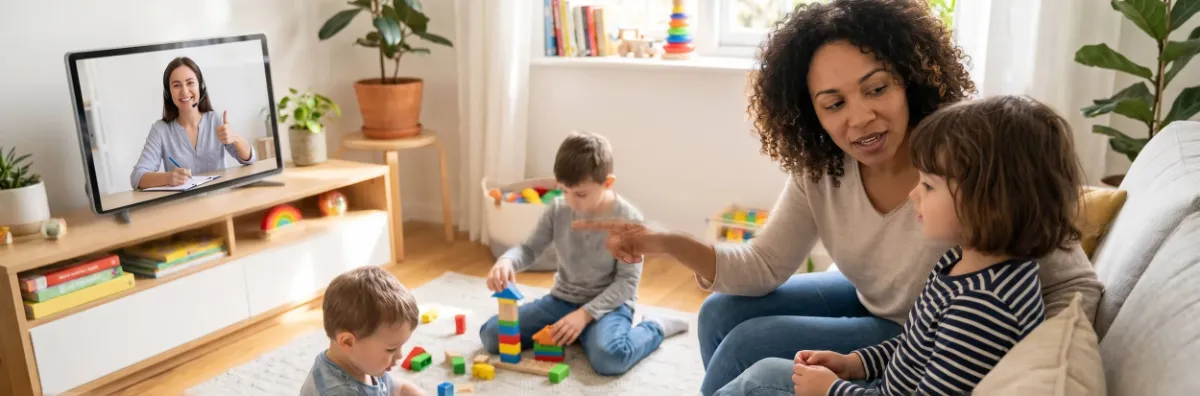
Meals are a natural time to talk. With the TV off and phones put away, children get your full attention and more chances to listen and respond.
Talk about the food (“This soup is hot!”), the day, or what’s coming next. Even a few minutes of back-and-forth conversation adds up over a week.
5. Offer Choices to Build Vocabulary
Instead of asking “Do you want a snack?”, which only needs a yes or no, try “Do you want crackers or banana?” Hold up both so your child can see them.
Choices give your child a reason to use a word, and they hear the words they need right before they answer.
6. Sing Songs and Say Rhymes
Songs and nursery rhymes are packed with repetition, rhythm, and sounds. That makes them easy for young children to remember and join in with.
Try pausing before the last word of a familiar line: “Twinkle, twinkle, little…” and wait for your child to fill it in.
7. Play Pretend
Pretend play, like feeding a doll, running a pretend store, or driving toy cars to the “doctor,” gives children reasons to use new words and longer sentences.
Follow your child’s lead and join their story. Add simple words for what’s happening: “The teddy is hungry. Let’s give him some cake!”
8. Don’t Finish Their Sentences
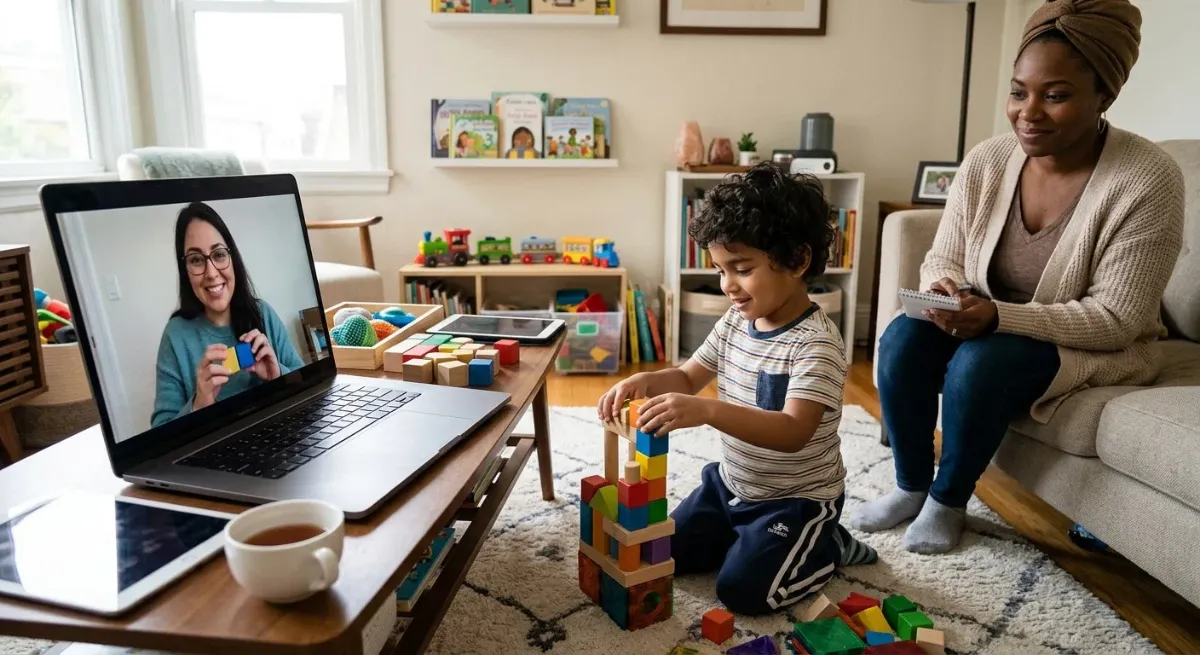
When your child is working to get a word out, it’s natural to want to help. But giving them time to finish on their own builds confidence and practice.
Wait a few seconds, keep eye contact, and show you’re listening. If they’re truly stuck, you can offer a gentle start: “You want the…?”
9. Build Routines With Rich Language
Routines repeat the same words every day, which helps children learn and predict them. Bath time, getting dressed, and bedtime are perfect for this.
Use the same simple phrases each time: “Shirt on. Arms up! Pants on. One leg, two legs.” Soon your child may start saying them with you.
10. Celebrate Attempts, Not Just Accuracy
If your child says “wawa” for water, that’s communication, and it’s worth celebrating. Respond to what they meant, and model the word: “Yes, water! Here’s your water.”
Praise for trying keeps children motivated to keep talking, even when their words aren’t perfect yet.
When Home Practice Isn’t Enough
These tips help every child, but they don’t replace a professional evaluation if you have concerns. If your child isn’t meeting speech milestones, is hard for others to understand, or gets frustrated when trying to talk, it’s worth checking in with a speech-language pathologist.
Not sure what’s typical for your child’s age? See our guide to speech sound milestones by age, or read 5 signs your child may need a speech evaluation.
At Oasis Speech, Sherry Owais, M.A., CCC-SLP, works with families across Texas and Florida through telehealth. Parents join sessions from home, so you see exactly what to practice and how. Learn more about our pediatric speech therapy services.
Want Help Building Your Child’s Language?
Home practice works best alongside therapy. At Oasis Speech, we complete evaluations within one week and coach parents in every session, so you know exactly what to practice at home. We serve families across Texas and Florida, 100% online. Book your free consultation to get started.
Book Free ConsultationSherry Owais, M.A., CCC-SLP, is the founder of Oasis Speech and a licensed speech-language pathologist serving children and adults in Texas and Florida via telehealth.
Related: Speech therapy for toddlers and late talkers and online speech therapy in McKinney, TX.



 Texas Medicaid and CHIP
 Community Plan (Medicaid)
 Step Up For Students