
Speech Sound Disorders
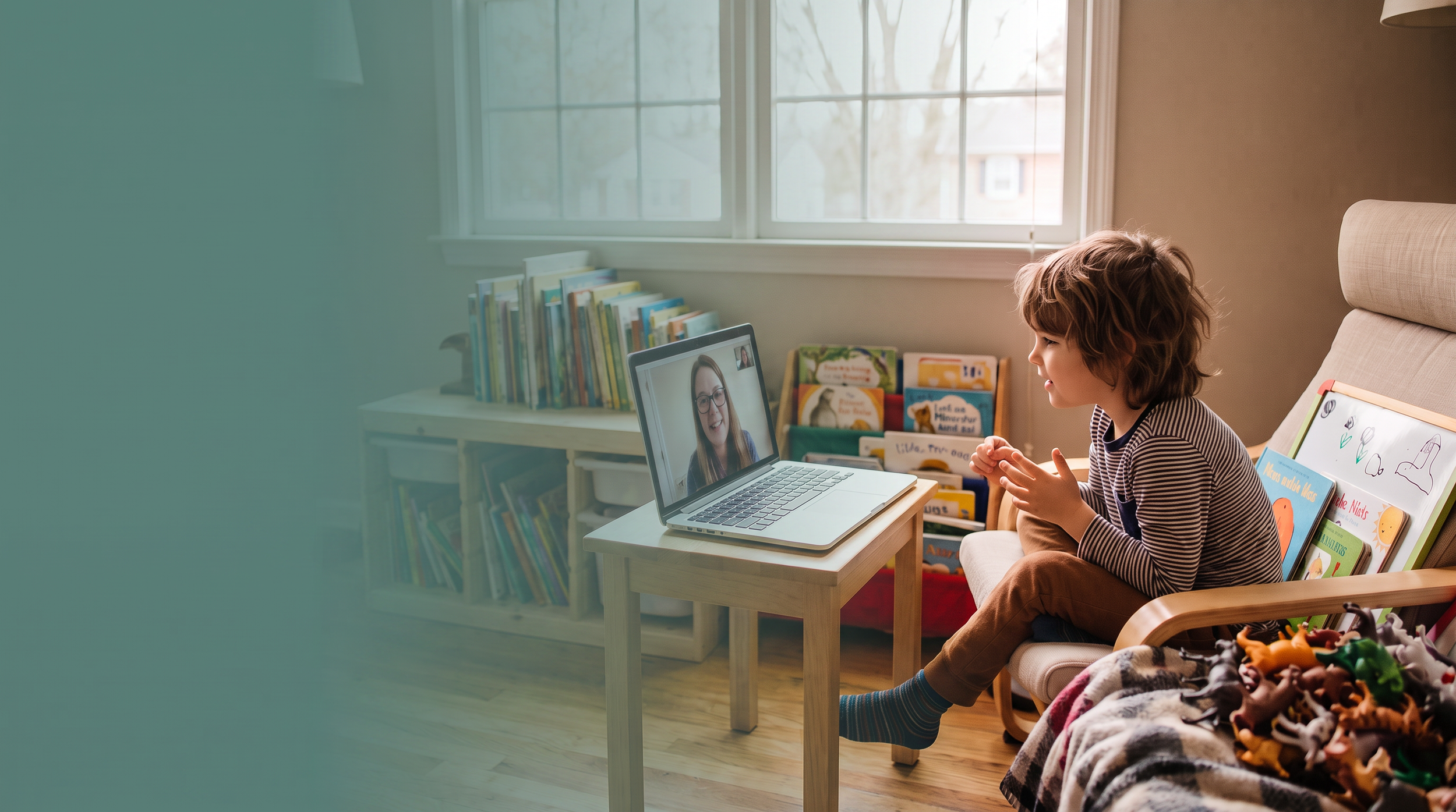
Does your child struggle with certain sounds? Speech sound disorders are common in children and highly treatable. Our speech therapists use proven techniques to help children of all ages produce sounds correctly and speak with clarity.
What Actually Is a Speech Sound Disorder?
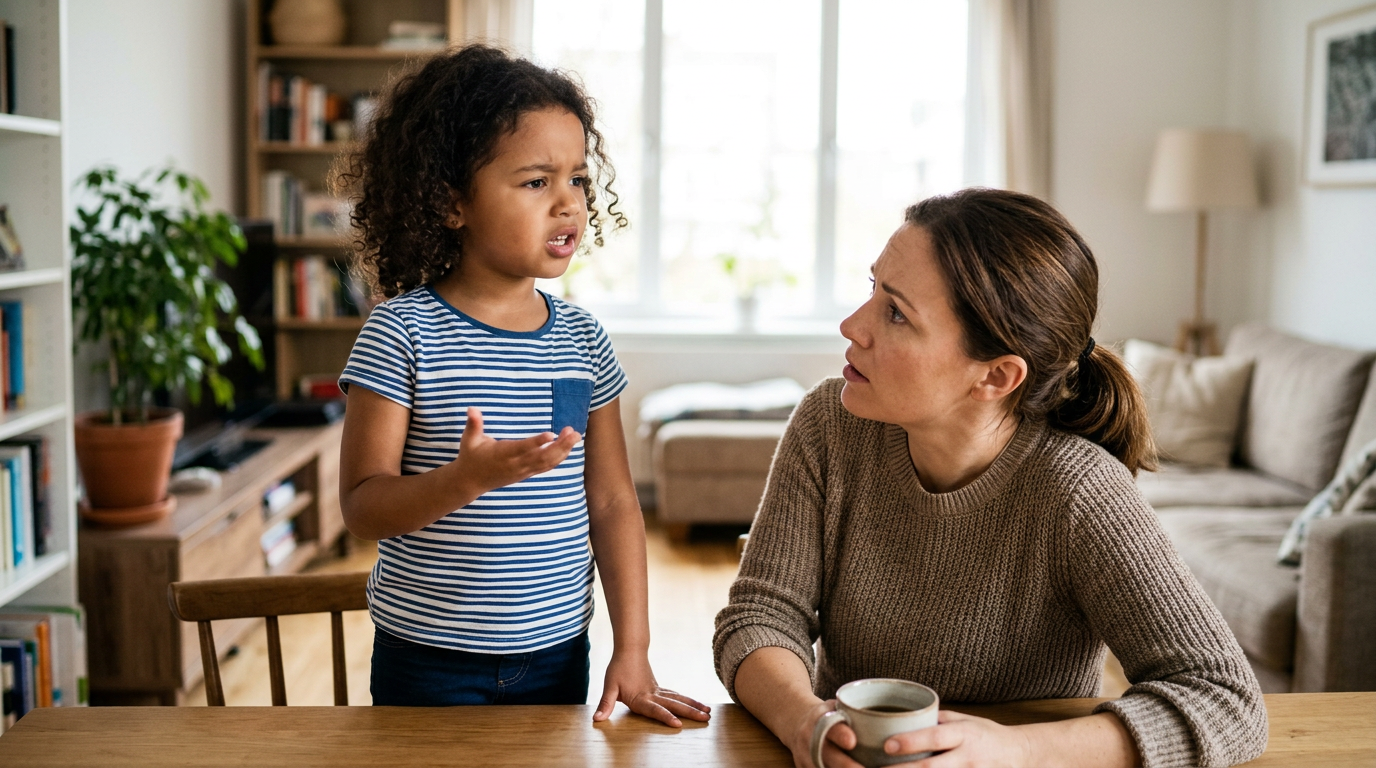
A speech sound disorder is when a child has difficulty producing certain speech sounds clearly — in ways that go beyond what's typical for their age. Kids might leave sounds off the ends of words, substitute one sound for another (like saying "wabbit" instead of "rabbit"), or distort sounds in ways that make speech harder to understand.
Here's the thing most parents don't realize: not all unclear speech is a problem.
A two-year-old who says "ducky" instead of "ducky" is completely normal. A four-year-old who still can't quite nail their R sounds? Also normal — that usually sorts itself out by age 6 or 7. But a six-year-old who's still hard to understand by unfamiliar listeners, or a child who's frustrated by their own speech? That's worth looking into.
Speech sound disorders come in a few flavors:
Articulation disorders — the child knows what sound they want to make but their mouth isn't producing it correctly yet. Think "wabbit" instead of "rabbit."
Phonological disorders — the child's brain isn't organizing sound patterns correctly. They might delete sounds from words ("ca" for "cat") or substitute entire groups of sounds in predictable patterns.
Both are treatable. Both respond well to speech therapy. And both are one of the most common reasons parents seek out a speech-language pathologist.
How Do You Know If Your Child Needs Help?
Here's what to watch for:
By age 3, your child should be mostly understood by family members, even if strangers don't catch every word.
By age 4–5, unfamiliar listeners should be able to understand most of what your child says.
By age 6–7, your child's speech should be clear and easy to understand, even if they're still working on some tricky sounds (like R, TH, or SH).
If your child is older than these benchmarks and still having trouble being understood, or if they're frustrated or avoiding talking because people don't understand them, that's a signal to get an evaluation.
Also watch for:
People asking "what?" repeatedly when your child is talking
Your child getting visibly frustrated or angry when people don't understand
Your child going quiet in group settings or social situations
A teacher mentioning concerns about speech clarity
Sounds that are completely absent (no D sounds at all, for example)
One more thing: If a younger sibling, cousin, or friend understands everything your child says but other adults don't, that's often a red flag. It usually means the sounds are there, but they're not quite clear enough for listeners who don't know your child well.
Why Does This Happen?
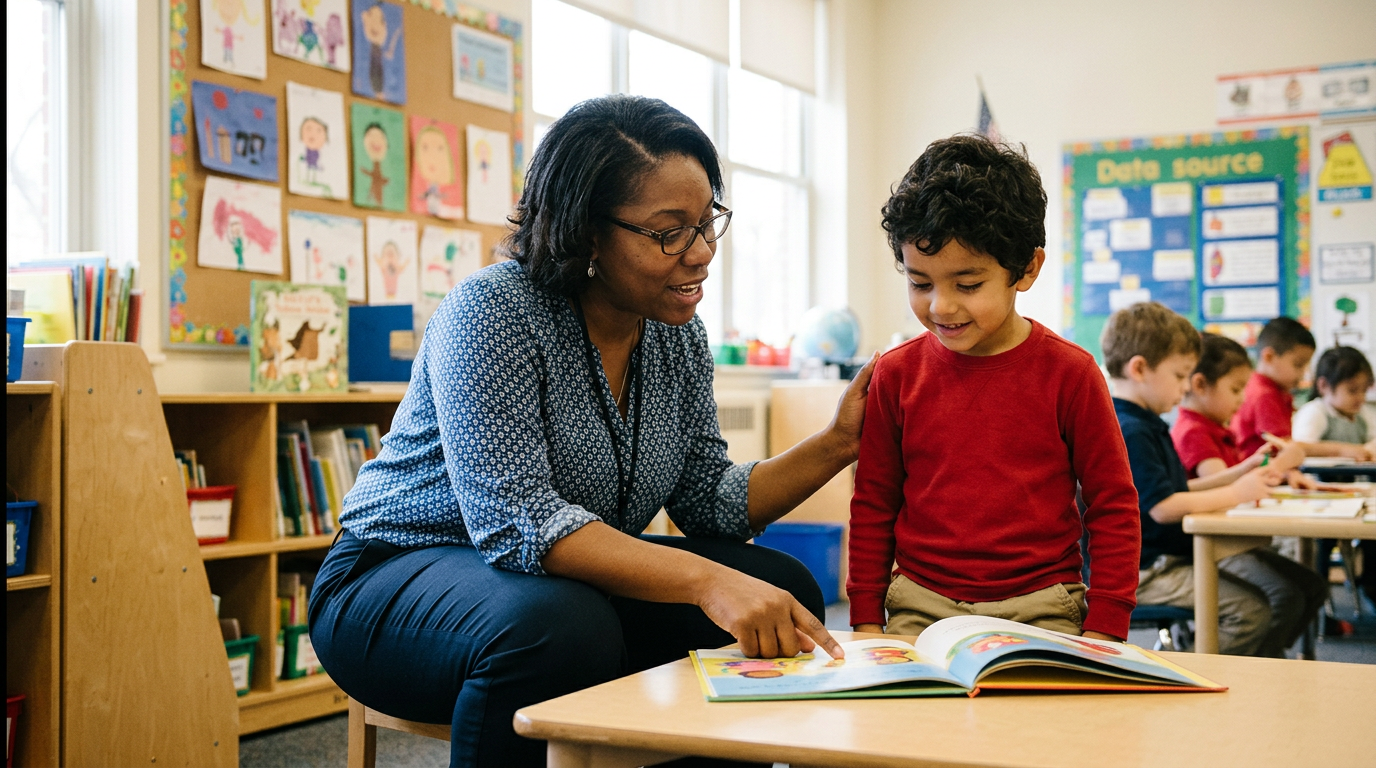
Speech sound disorders can come from a bunch of different places:
Developmental delay — the brain is just taking a bit longer to organize these sounds. Very common, often resolves on its own, but sometimes benefits from a little help.
Oral-motor weakness — the muscles involved in speech (lips, tongue, jaw) aren't as strong or coordinated as they need to be yet. Speech therapy with a focus on strengthening these muscles helps a lot.
Hearing issues — if a child isn't hearing sounds clearly, they can't produce them clearly. This is why a hearing screening is often part of a speech evaluation.
Phonological patterns — the child's brain has learned a shortcut pattern that's getting in the way. These respond really well to targeted therapy.
Sometimes there's no clear "why" — and that's okay. The evaluation will give you answers. What matters is whether your child needs help, not necessarily why the delay happened in the first place.
Why Telehealth Works for Speech Sound Disorders
You might wonder: can speech sound disorders really be treated via video? The answer is yes — and research shows that telehealth is just as effective as in-person therapy for sound disorders in children.
Here's why:
Your therapist can see the sounds clearly. On a video call, your speech therapist has a close-up view of your child's mouth, tongue, and lips. They can see exactly what's happening with articulation and give real-time feedback.
Your child is in their comfort zone. Kids often perform better when they're relaxed and at home. No waiting room anxiety, no unfamiliar office, no sensory overwhelm. They're ready to engage from minute one.
Parents get live coaching. This is the telehealth superpower. You're right there in the session, and the therapist coaches you in real-time on what to do, how to respond, and how to practice between sessions. You become part of the therapy team.
Consistency is easier. No cancellations because of traffic or weather. No missed sessions because of scheduling conflicts. You log in from home at the same time each week. Consistency is what drives progress.
Real-life carryover happens naturally. Your child's favorite toys, books, and activities are right there. The therapist helps you weave therapy into your everyday routines — reading, snack time, bath time — so the work feels natural, not clinical.
How Telehealth Speech Therapy Helps
Here's what makes speech therapy for sound disorders different from what a lot of people imagine:
It's not a parent sitting a child down to drill sounds over and over. ("Say your R. Say your R. Say your R.") That doesn't work, and honestly, it's boring.
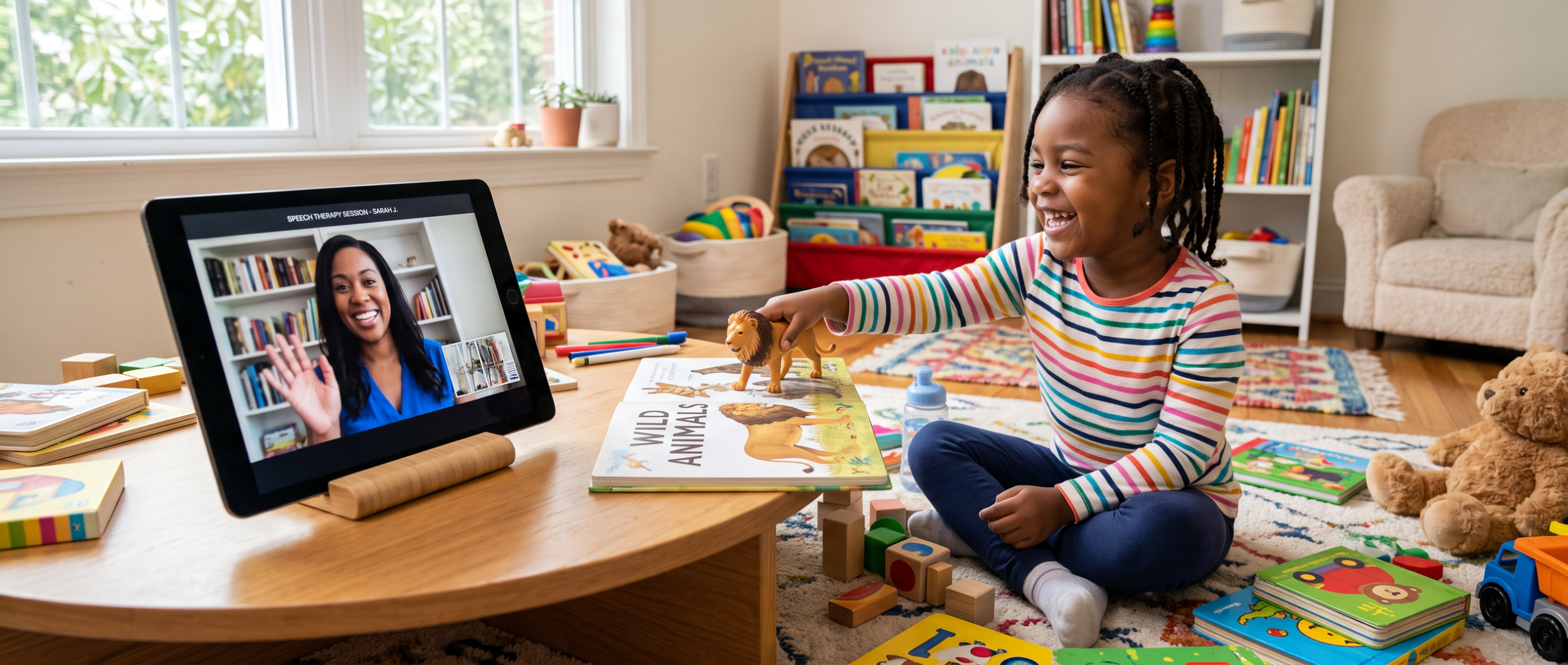
And with telehealth? It's even better. Your child is already comfortable at home, in their own space, with their favorite toys nearby. That comfort means better engagement and faster learning.
Good telehealth speech therapy for sound disorders focuses on:
Play-based learning — your child practices the sound in games, songs, stories, and activities through the screen. They're having fun. They have no idea they're working. And everything is already there in your home.
Mouth awareness — learning how to move their tongue, lips, and jaw to make the sound. Sometimes kids just need to see or feel what the right position feels like. On a video call, your therapist can see the sound-making clearly and give you specific feedback.
Real-world practice — not just single sounds in isolation, but those sounds in words, sentences, and conversations that actually matter to your child. The therapist watches how your child is communicating in their natural home environment.
Live parent coaching — telehealth therapy is uniquely powerful because your speech therapist can coach you in real time. You're right there in the session, and the therapist shows you exactly what to do. The work that happens between sessions is just as important as the session itself, and now you have clear, live guidance.
Most children with speech sound disorders see solid progress in 6–12 months of regular telehealth therapy, though some clear up faster and some take a bit longer. The earlier you start, the easier it usually is — kids' brains are most flexible before age 7. And with telehealth, getting started is as simple as logging in from home.
What You Can Do Right Now?
While you're deciding about a telehealth evaluation, here's what actually helps:
Keep talking to your child. Read books together. Narrate what you're doing ("I'm making a sandwich"). Ask questions. Have conversations. This builds language and confidence. These everyday moments are exactly what a telehealth therapist will help you optimize.
Don't correct them constantly. If your child says "my seester" instead of "my sister," you don't need to say "say 'sister.'" Just respond naturally — "Oh yes, your sister is coming to play!" Your child learns from hearing the correct sound in context. A speech therapist via telehealth will coach you on how to do this naturally during your sessions.
Notice what they're doing right. Kids who are struggling with clarity often feel self-conscious. Point out the sounds they're nailing, not just the ones that need work.
Play with sounds together. Sing songs, read silly books with lots of rhyming, make animal sounds, play with word games. Making sounds is supposed to be fun. The beauty of telehealth therapy is that your therapist can guide these play-based activities from your home and adjust them in real-time.
Don't assume they'll "grow out of it." Sometimes they do, and that's great. But sometimes a little support from a speech therapist makes all the difference — especially before school starts. And with telehealth, you can get that support without adding another appointment to your schedule.
The Bottom Line
If you're wondering whether your child's speech clarity is on track, trust that wondering. Parents know their kids. You don't need a referral from a doctor to get an evaluation. You don't need to wait and see if it resolves on its own. You can reach out directly to a speech-language pathologist and get answers — from home, via telehealth.
Early support makes a real difference. And most families are amazed at how quickly kids can improve once they get the right help. Telehealth speech therapy is just as effective as in-person therapy for speech sound disorders — with the added benefit of convenience, flexibility, and real-time parent coaching.
Ready to Get Answers?
At Oasis Speech, we evaluate children for speech sound disorders via telehealth and start them on a path toward clearer, more confident communication, all from the comfort of your home. We complete evaluations within one week and work with families throughout Florida and Texas via secure video sessions. No waiting lists. No commute. No guesswork.
Your child will work with Sahar Owais, MS, CCC-SLP, a licensed speech-language pathologist with extensive experience treating speech sound disorders in children. Sessions are engaging, play-based, and tailored to your child's specific needs.