

Receptive and Expressive Language
Does your child understand everything you say but struggle to find the words? Get expert speech therapy from home via secure telehealth. We close the gap between what your child understands and what they can express — from your couch.
Your child seems to understand everything you say — they follow directions, respond to their name, and clearly get what's happening around them. But when it comes to talking? The words just aren't there yet. Or maybe it's the opposite: your child talks constantly, but sometimes people don't quite understand what they mean. Or they struggle to answer simple questions.
That gap between what your child understands and what they can say is the space where receptive and expressive language live.
Most parents don't think much about the difference — they just notice their child isn't talking as much as the neighbor's kid, or that their child has a lot to say but it's not always clear. And that's exactly when it's worth taking a closer look.
The good news? Getting help is easier than ever. With telehealth speech therapy, you can access expert language assessment and treatment from home — no waiting rooms, no commute, just play-based therapy that fits your family's life.
What's The Difference?
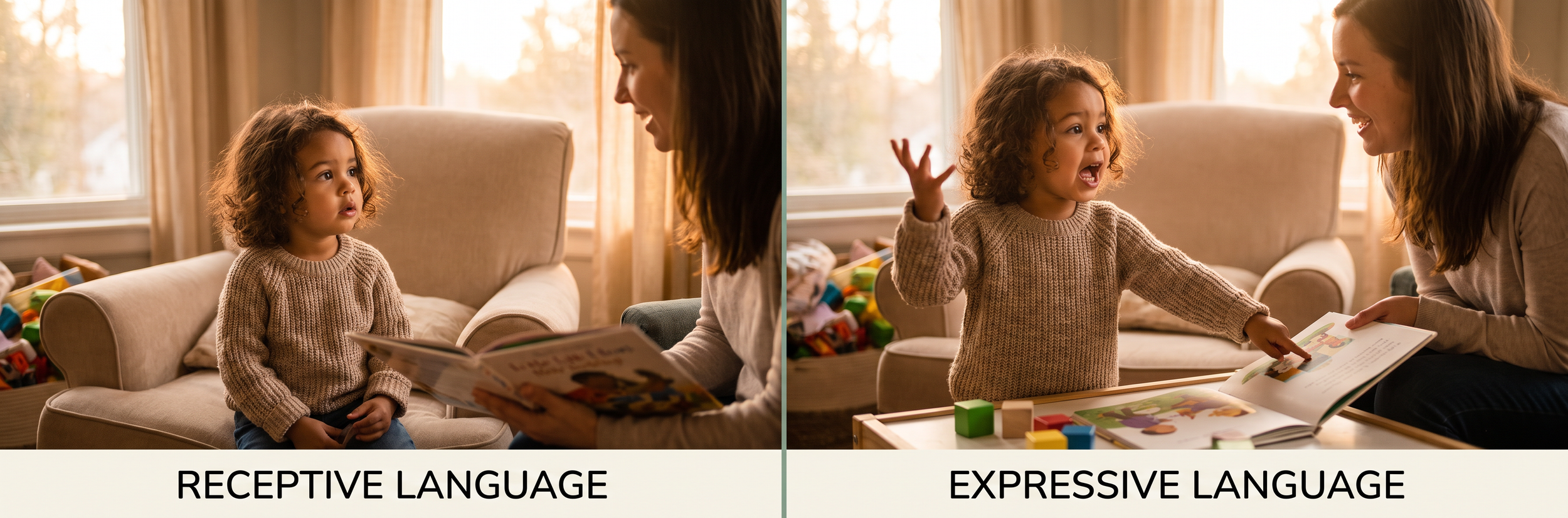
Receptive language is what your child understands — the words they hear and the meaning they make from them. It's their ability to follow directions, respond to questions, and make sense of what's happening around them.
Expressive language is what your child says — the words they use, how they string them together, and how they communicate their ideas, needs, and feelings.
Here's the key thing: receptive language usually develops faster than expressive language. This is completely normal. Most toddlers understand way more than they can say. A 18-month-old might understand 200 words but only say 50. That's typical.
But sometimes the gap is bigger than it should be, or a child's expressive language lags behind what's expected for their age. That's when telehealth speech therapy can make a real difference — often without disrupting your family's routine or schedule.
Early Language Development: What's Normal?
By age 1:
Understanding: Recognizes own name, understands "no," responds to simple words like "mama" or "ball"
Expressing: Says first words, babbles with intention
By age 2:
Understanding: Follows simple, one-step directions ("Get your shoes"), understands 200+ words
Expressing: Says 50+ words, starts putting two words together ("more milk," "daddy go")
By age 3:
Understanding: Follows two-step directions, understands simple questions ("Where's your shoe?"), knows colors and basic concepts
Expressing: Uses 200+ words, speaks in short sentences, tells simple stories
By age 4–5:
Understanding: Follows multi-step directions, understands most of what's said in conversation, asks "why" questions
Expressing: Speaks in longer sentences, uses more complex grammar, asks and answers questions, tells longer stories
If your child is significantly behind these benchmarks, or if the gap between what they understand and what they say is noticeably large, that's worth exploring.
Red Flags: When To Seek A Telehealth Evaluation

Early warning signs:
By 18 months: Not using any words or sounds to communicate
By 2 years: Saying fewer than 50 words, not understanding simple directions
By 2.5 years: Not combining two words, difficulty following one-step directions
By 3 years: Using fewer than 200 words, not answering simple questions
By 4 years: Difficulty expressing needs, can't tell you about their day, struggles in group settings
Other signs:
Your child understands you fine but rarely initiates conversation
They use mostly single words and rarely put words together
They struggle to answer "what," "where," or "who" questions
They get frustrated because they can't express what they want
Teachers or caregivers mention concerns about their language
Don't wait. You don't need a referral to book a telehealth evaluation. No waiting lists. No driving to appointments. A licensed speech-language pathologist can assess your child via secure video from your home within days.
One important note: If your child only speaks one language but understands two, that's different from a language delay. Bilingual children often take longer to combine words in each language, and that's completely normal and healthy.
Why Does This Happen?
Receptive and expressive language delays can happen for lots of reasons:
Developmental delay — the brain is taking a bit longer to organize language. Very common, and often improves with time and support.
Hearing issues — if a child isn't hearing sounds clearly, they can't understand or produce them well. A telehealth speech therapist can help identify if hearing might be a factor and refer for formal screening if needed.
Limited language exposure — some children need more language-rich interactions to get their language skills moving. This isn't about parenting — it's just how that particular child learns best. Telehealth therapy coaches parents on how to build language into everyday routines.
Oral-motor weakness — the muscles involved in speech aren't strong or coordinated enough yet, which can affect both understanding and expressing language.
Autism spectrum or other developmental concerns — language delays sometimes co-occur with other developmental differences that deserve evaluation.
Speech sound disorder — sometimes a child has trouble producing sounds, which can make it harder for them to practice language skills.
Sometimes there's no clear "why" — and that's okay. A comprehensive telehealth evaluation will give you answers. What matters is whether your child needs support, not necessarily why the delay happened.
How Telehealth Speech Therapy Helps
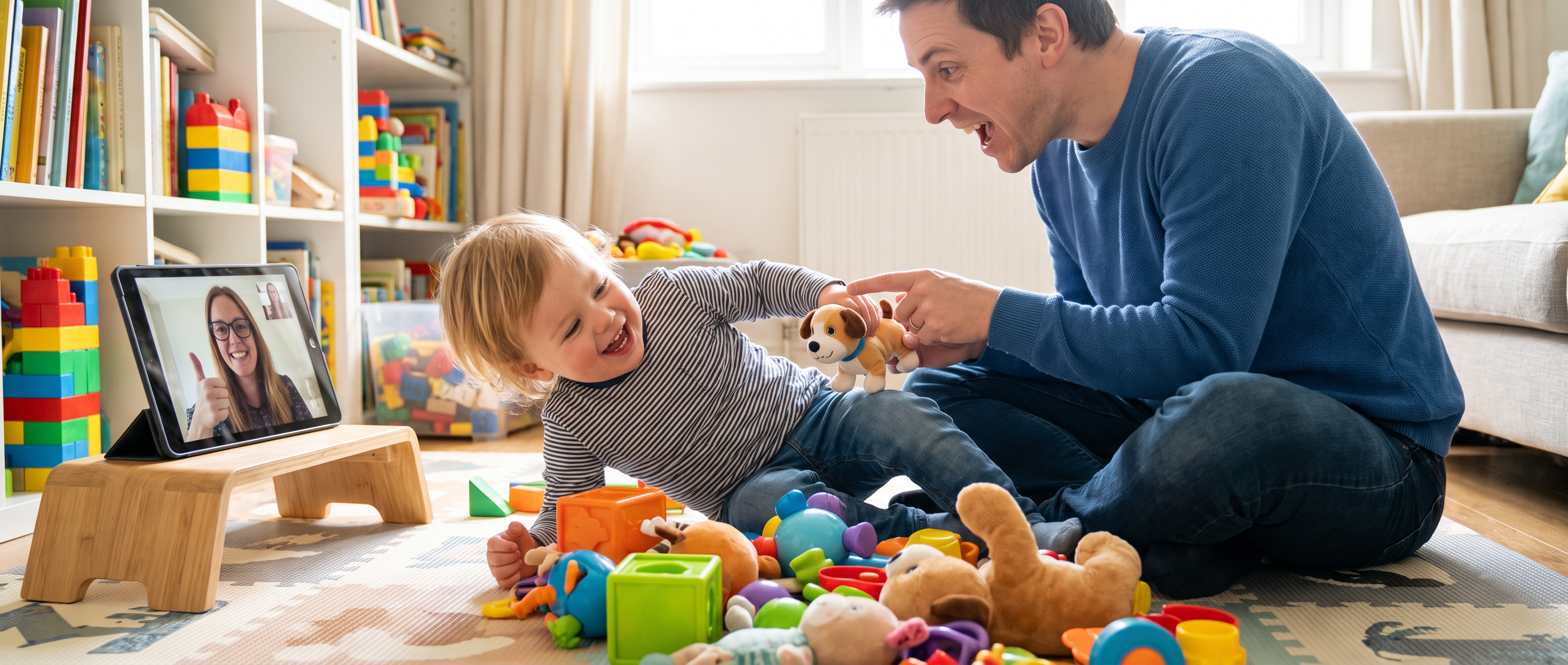
Here's why telehealth works so well for language delays:
Your therapist sees real communication. On a video call, your speech therapist watches how your child naturally communicates at home — with toys they love, in their favorite room, interacting with people they know. This gives a much clearer picture than a clinic-based evaluation.
Parents become the language coaches. This is the telehealth superpower. Your speech therapist coaches you during sessions on how to expand your child's language in everyday moments — during meals, playtime, bath time, bedtime. The work between sessions is where most progress happens, and now you have live guidance.
Language therapy is play-based. Your child isn't drilling flashcards or sitting still. They're playing with toys they love, reading books, singing songs, and having conversations. Language development happens naturally through interaction, not through exercises.
Consistency is easier. No missed sessions because of traffic or weather. Your child gets regular, predictable language input from a professional, plus coaching for you on how to keep that language-rich environment going all day long.
Real-life carryover happens naturally. The toys and activities your child loves are right there. The therapist helps you weave language building into your everyday routines, so it doesn't feel like therapy — it feels like play.
Most children with language delays see real progress within 6–12 months of regular therapy, though some move faster and some take longer. The earlier you start, the better — young brains are incredibly flexible.
What You Can Do Right Now
While you're thinking about a telehealth evaluation, here's what actually helps:
Talk to your child constantly. Narrate what you're doing ("I'm making lunch. Do you want cheese or crackers?"). Describe what you see ("Look, a red car!"). Ask questions. Your child learns language by hearing it.
Read together every day. Point to pictures, ask questions, let them turn pages. Reading is one of the most powerful language-building tools you have — and your telehealth therapist will show you how to maximize language-learning during these moments.
Expand what they say. If your child says "dog," you say "Yes, big brown dog! The dog is running!" You're giving them more language without correcting them. During telehealth sessions, your therapist will coach you on exactly how to do this naturally.
Follow their lead. Notice what your child is interested in and talk about that. If they're fascinated by trucks, talk about trucks. They'll learn faster when they're engaged. Telehealth therapists use YOUR child's favorite toys and interests during sessions.
Limit screen time. Language develops through interaction, not through watching videos. Real conversation with real people — and real play with family — is what builds language skills.
Don't worry about making it perfect. You don't need flashcards or special programs. Just talking, reading, playing, and singing together builds language naturally. And a speech therapist via telehealth can guide you on maximizing those everyday moments.

The Bottom Line
If you're wondering whether your child's language development is on track, trust that wondering. You don't need a referral from a doctor. You don't need to wait. You can reach out directly to a speech-language pathologist and get answers — all from home, via a secure video call.
Early support makes a real difference — especially for language delays, which respond beautifully to therapy. Telehealth speech therapy is just as effective as in-person sessions for language development — with the added benefits of convenience, flexibility, and real-time parent coaching on how to support your child's language growth every single day.
Ready to Get Answers?
At Oasis Speech, we evaluate children for receptive and expressive language delays via telehealth and start them on a path toward clear, confident communication — all from the comfort of your home. We complete evaluations within one week and work with families throughout Florida and Texas via secure video sessions. No waiting lists. No commute. No guesswork.
Your child will work with Sahar Owais, MS, CCC-SLP, a licensed speech-language pathologist with extensive experience helping children develop strong language skills. Sessions are engaging, play-based, and tailored to your child's specific needs. You'll be right there, coached live on how to support language growth every day.