

SOCIAL COMMUNICATION
Your child talks but struggles to make friends? Social communication skills are learnable. Get expert coaching from home with telehealth speech therapy.
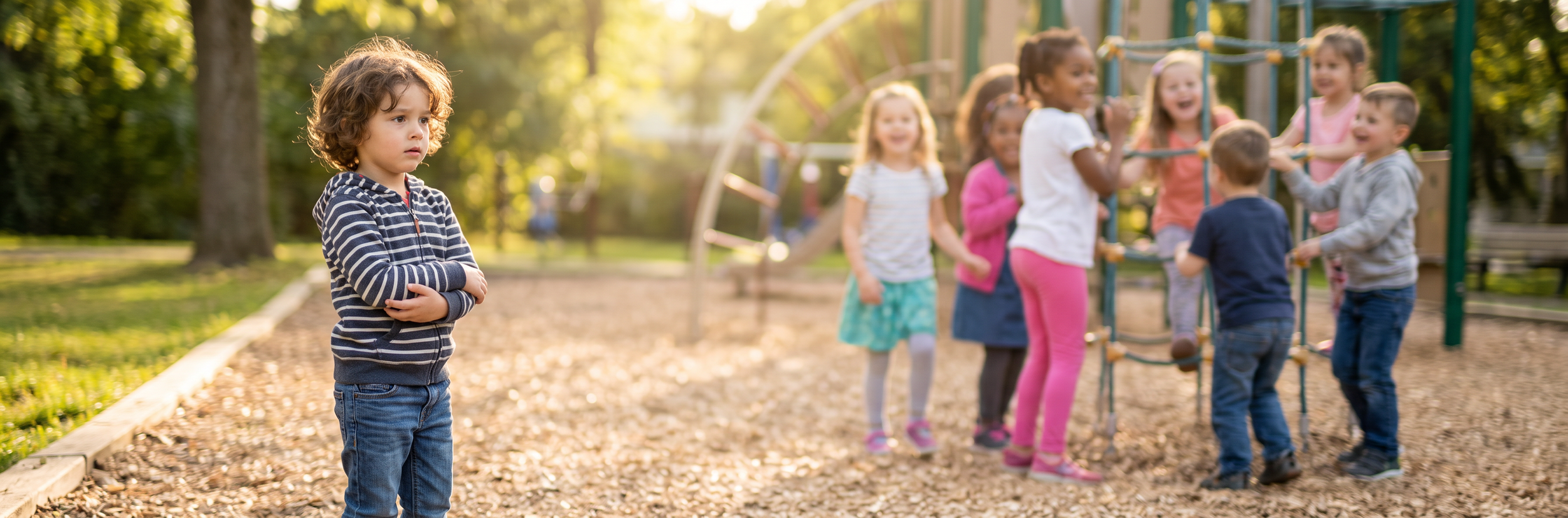
Your child can talk just fine — maybe even talk a lot. But when it comes to actually connecting with other kids, something feels off. They struggle to take turns in conversation. They don't pick up on social cues. They miss jokes. They interrupt constantly. Or they stand on the edge of the playground watching other kids play, unsure how to join in.
Social communication isn't just about saying words. It's about using words in social situations — understanding what to say when, reading other people's faces and body language, taking turns, picking up on what others are feeling.
Many parents don't realize social communication is its own thing, separate from speech clarity or vocabulary. A child can say every word perfectly and still struggle with the unwritten rules of conversation and friendship. That's social communication, and it's absolutely worth paying attention to.
The good news? With telehealth speech therapy, you can get expert support from home — coaching on how to guide your child toward stronger friendships, better confidence, and easier social connections.
What is Social Communication?
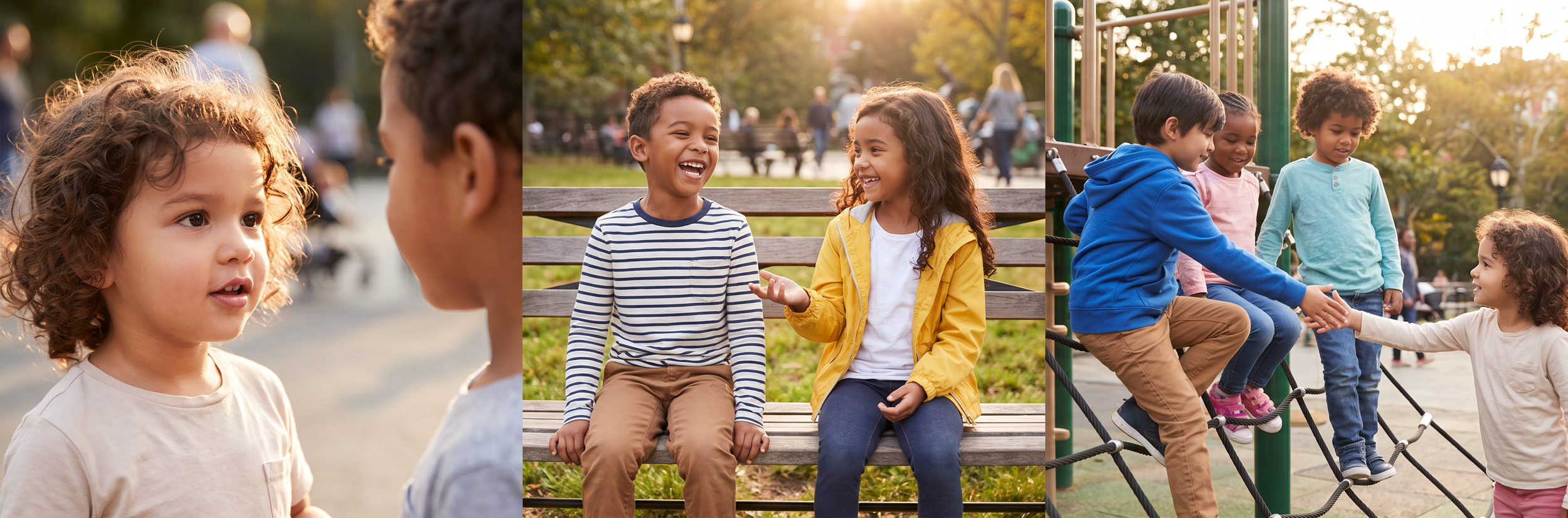
Social communication (also called pragmatic language) is the ability to use language socially and flexibly. It's not just the grammar or the words — it's all the invisible rules about how to use those words with other people.
It includes:
Understanding social cues — Reading facial expressions, body language, and tone of voice. Knowing when someone is joking, angry, sad, or bored.
Turn-taking in conversation — Waiting your turn to talk, not interrupting, listening to what others say, then responding.
Staying on topic — Following along when someone changes the subject, and when it's appropriate to bring up something new.
Adjusting communication for different situations — Talking to your teacher differently than you talk to your best friend. Knowing when to be silly and when to be serious.
Understanding perspective — Realizing that other people have different thoughts, feelings, and knowledge than you do. Not everything you find hilarious is funny to everyone else.
Making and keeping friends — Starting conversations, joining group activities, understanding what makes a good friend, managing disagreements.
Reading the room — Knowing that it's not the right time to talk about your favorite video game when someone is telling you about their sad day.
Kids with strong social communication skills make friends more easily, do better in school, feel more confident, and navigate social situations with less stress.
Red Flags: Signs Your Child May Struggle With Social Communication
Early warning signs (ages 3–5):
Doesn't maintain eye contact or seems uncomfortable looking at people's faces
Struggles to take turns in conversation, often interrupts or talks over others
Doesn't seem to understand jokes, sarcasm, or teasing
Has difficulty starting or joining conversations
Plays alone rather than with other kids, doesn't seem interested in playing together
Doesn't pick up on when someone is joking vs. serious
Talks at people rather than with them — lots of one-way monologues
Difficulty understanding basic emotions in others (when someone looks sad, angry, or happy)
Seems oblivious to social rules (standing too close, blurting things out, not listening)
Later signs (ages 6+):
Struggles to make or keep friends
Often says inappropriate things without realizing it
Difficulty understanding sarcasm, jokes, or double meanings
Doesn't adjust communication style for different people (talks to teacher the same way they talk to best friend)
Avoids group situations or feels extremely anxious in social settings
Gets bullied or teased, and doesn't understand why
Doesn't understand why people are upset with them
Prefers to talk to adults rather than peers
Important: Social communication challenges often co-occur with autism spectrum disorder, ADHD, language disorders, or anxiety. A comprehensive telehealth evaluation can help identify what's happening and whether other concerns should be explored.
Why Does This Happen?
Social communication difficulties can arise for several reasons:
Developmental delay — Some children need more time to develop these skills. Very common, especially in kids who are shy or introverted by nature.
Language disorder — If a child struggles with language overall (vocabulary, grammar, understanding), social communication is often affected too.
Autism spectrum — Social communication challenges are a hallmark of autism. Kids on the spectrum often struggle with understanding unwritten social rules and interpreting social cues.
ADHD — Kids with ADHD often interrupt, struggle with turn-taking, miss social cues because they're not paying attention, or blurt things out without thinking.
Anxiety — Some children understand social rules perfectly but are so anxious in social situations that they freeze or avoid them entirely.
Limited social exposure — Kids who spend a lot of time alone or with adults may need more practice with peer interaction skills.
Hearing or processing issues — If a child can't hear social nuances or process language quickly enough, social communication is affected.
Trauma or difficult social experiences — Kids who've been bullied or had negative peer experiences may withdraw or struggle to trust others socially.
Sometimes there's no clear "why" — and that's okay. The important thing is recognizing the pattern and getting support early.
How Telehealth Speech Therapy Helps
Here's why telehealth works beautifully for social communication:
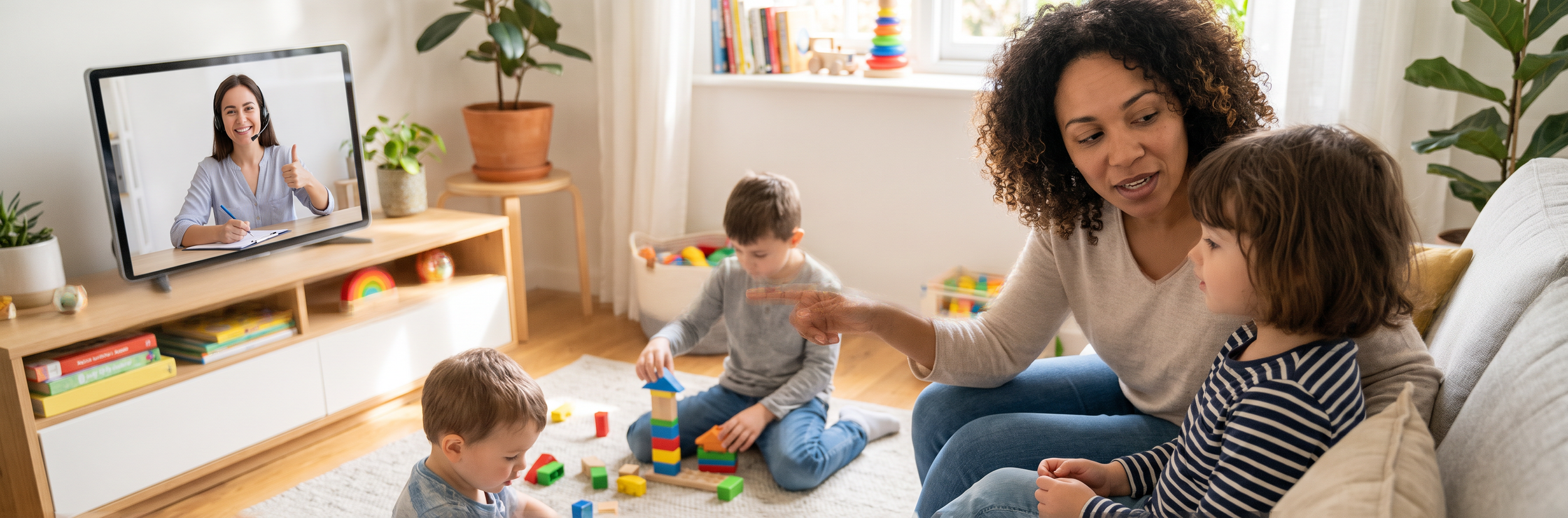
Your therapist coaches you in real time. Social communication skills are practiced with the people your child interacts with every day — parents, siblings, teachers, peers. A telehealth therapist can watch you interact with your child, give you feedback, and show you exactly how to guide social skills during everyday moments — meals, car rides, bedtime, sibling conflicts. This live coaching is the secret sauce.
Your child practices in their natural environment. Social skills aren't learned in a therapy room — they're learned by actually being social. Telehealth therapy happens at home, where your child is most comfortable, and the therapist helps you create opportunities for practice.
The work happens between sessions, where it matters. Your therapist gives you specific strategies for teachable moments throughout the day. You're guiding your child's social understanding during real interactions, not practicing fake conversations with a clinician.
Your child sees results in real relationships. Better friendships. Less anxiety. More confidence. More moments where your child gets the joke and laughs with peers instead of at them.
Most children with social communication challenges see meaningful progress within 6–12 months of consistent therapy, especially when parents are actively coached and involved in the work.
What You Can Do Right Now
While you're thinking about a telehealth evaluation, here's what actually helps:
Coach, don't criticize. If your child misses a social cue, don't say "You didn't listen" or "That was rude." Instead, explain the situation: "I think Tommy was joking. See how he's smiling? That's his funny face." You're teaching, not correcting.
Narrate social situations. Point out what's happening in social moments: "Did you see? She looked happy when you asked to play." "He sounds upset — let's ask if he's okay." Help your child read the room by explaining it out loud.
Create practice opportunities. Invite friends over. Go to group activities. Don't protect your child from social situations — lean into them with coaching and support. These are the real classrooms where social skills develop.
Read books together and discuss feelings. "How do you think she felt when that happened?" "Would that be funny or mean?" "What could he do differently next time?" Books are wonderful for practicing social thinking.
Model healthy social communication. Let your child see you taking turns in conversation, admitting mistakes, showing empathy, adjusting your behavior for different people.
Don't force friendships. Some kids need more time. Some kids are naturally more introverted or have smaller social circles. That's okay. The goal isn't popularity — it's comfort and connection.
Limit screen time. Social skills develop through real interaction, not videos. Reduce screen time in favor of conversations, group play, and real-world peer time.
The Bottom Line
If you're noticing your child struggles with friendships, misses social cues, or seems uncomfortable in social situations, trust that observation. Social communication challenges can be subtle — your child might talk fine but still struggle to connect with peers — so they're easy to miss or dismiss.
Early support makes a real difference. Social communication skills are learnable — they just need coaching and practice in real-world situations. Telehealth speech therapy is ideal for this because it happens in your home, with your family, during the moments that matter most.
Ready to Get Answers?
At Oasis Speech, we evaluate children for social communication delays via telehealth and start them on a path toward clear, confident communication — all from the comfort of your home. We complete evaluations within one week and work with families throughout Florida and Texas via secure video sessions. No waiting lists. No commute. No guesswork.
Your child will work with Sahar Owais, MS, CCC-SLP, a licensed speech-language pathologist with extensive experience helping children develop strong language skills. Sessions are engaging, play-based, and tailored to your child's specific needs. You'll be right there, coached live on how to support language growth every day.