

Adult Stuttering Therapy
Telehealth therapy for adults who stutter, helping you speak with confidence at work and in daily life across Florida and Texas.
You've stuttered your whole life. Maybe you've learned to work around it — switching words, staying quiet in meetings, or letting others speak for you. Or maybe your stutter has become harder to manage recently because of stress, a big life change, or a neurological event.
Either way, stuttering can affect your confidence, your career, and your relationships. And it can feel like something you just have to live with.
Here's the hope: stuttering responds to therapy at any age. Even if you've stuttered for decades, targeted speech therapy can help you speak more easily, reduce avoidance, and feel more confident communicating.What Is Stuttering in Adults?
Stuttering is a fluency disorder that interrupts the smooth flow of speech. It can include repeating sounds or words ("b-b-but"), stretching sounds ("sssso"), or getting stuck with no sound coming out (blocks). Some adults also experience cluttering, where speech is rapid or irregular and hard for others to follow.
Stuttering often comes with more than what others hear. Many adults experience tension, anxiety before speaking, or avoidance of certain words, phone calls, or situations.
In adults, stuttering is usually:
Lifelong — beginning in childhood and continuing into adulthood.
Acquired — appearing for the first time after a stroke, brain injury, or other neurological change.

Signs It May Be Time for Therapy
Your stutter is getting worse or harder to manage.
You avoid certain words, phone calls, or speaking situations.
Speaking feels effortful, tense, or exhausting.
Stuttering is affecting your work, relationships, or confidence.
You've noticed sudden changes in your speech.
If speech changes appear suddenly, especially alongside weakness, confusion, or facial drooping, call 911 — these can be signs of a stroke.
Why Stuttering Happens
Lifelong stuttering is linked to differences in how the brain plans and times speech movements. It often runs in families and is not caused by nervousness or anything you did wrong — though stress can make it more noticeable.
Acquired stuttering can result from stroke, brain injury, or other neurological conditions. If you're experiencing other speech changes, such as slurred or weak speech or difficulty finding words, you may also benefit from support for dysarthria or aphasia.
How Telehealth Speech Therapy Helps
Fluency techniques. Learn practical strategies like easy onsets, light contacts, and paced speech to make speaking feel smoother and less effortful.
Reducing anxiety and avoidance. Therapy addresses the thoughts and feelings around stuttering, helping you approach speaking situations with more confidence.
Real-world practice. Therapy focuses on the conversations that matter to you — meetings, presentations, phone calls, and social situations — not just isolated drills.
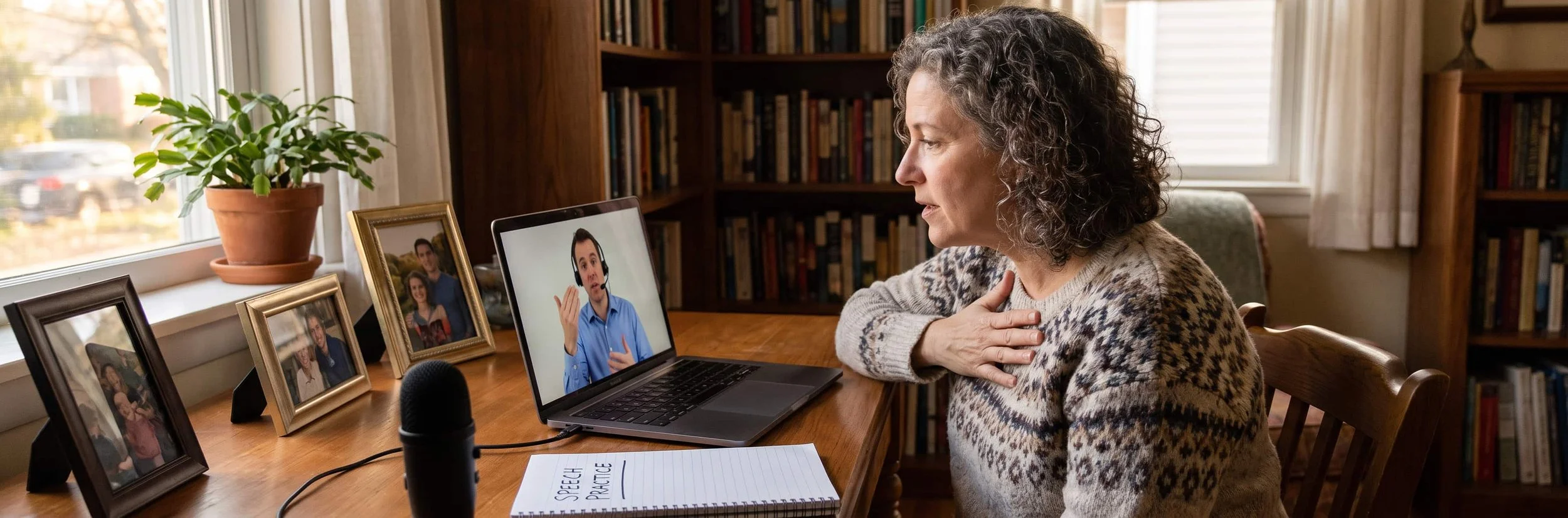
Consistent, flexible sessions. Regular practice makes the biggest difference. Telehealth removes commute time, making it easier to fit therapy into a busy schedule.
Practice where you actually talk. Working from home or your office means you build skills in the real environments where you communicate every day.
How Family and Friends Can Help
Listen patiently. Don't rush, interrupt, or finish sentences.
Keep eye contact and stay relaxed. A calm listener makes speaking easier.
Focus on what's said, not how it's said.
Slow down your own pace. A relaxed conversation rhythm reduces pressure.
Celebrate effort. Speaking up when stuttering is hard takes courage.
The Bottom Line
Stuttering is treatable at any age. With the right strategies and support, you can speak more easily, reduce avoidance, and communicate with confidence — at work, at home, and everywhere in between.
Ready to Get Answers?
At Oasis Speech, we work with adults who stutter — whether lifelong or acquired — through secure telehealth sessions across Florida and Texas. We complete evaluations within one week so you can start without long waiting lists or a commute.
You'll work with Sherry Owais, MA, CCC-SLP, a licensed speech-language pathologist who provides evidence-based, individualized therapy tailored to your communication goals. Sessions focus on fluency techniques, confidence-building strategies, and real-world practice that makes speaking easier in your work conversations and personal interactions.
Book a free 15-minute consultation to talk through your goals and next steps.