
Online Speech Therapy for Parkinson’s Disease
Helping people with Parkinson’s be heard the first timekeep a strong voicestay in the conversationspeak clearly on the phone
Many people with Parkinson’s disease notice their voice getting quieter and their speech harder to understand. Speech therapy can help. Oasis Speech provides one-on-one online speech therapy for adults with Parkinson’s across Texas and Florida.
Evening and weekend therapy appointments available
“We highly recommend her services to anyone seeking speech therapy!”

Your therapist
Sherry Owais, M.A., CCC-SLPLicensed speech-language pathologist in Texas and Florida.On this page
Key points
Parkinson’s speech therapy, in brief
- Many people with Parkinson’s disease notice their voice getting quieter and their speech harder to understand. Speech therapy can help.
- People with Parkinson’s often do not notice their own voice getting softer.
- Parkinson’s is progressive, and speech skills are easier to keep than to rebuild.
- We accept Medicare in Texas, and verify your benefits before you begin.
Speech and voice
How Parkinson’s Disease Affects Speech and Voice
The soft voice is called hypophonia. The speech pattern is called hypokinetic dysarthria.
Parkinson’s disease speech problems usually come on slowly. These are the changes people notice most.
- A soft or fading voice
- Speech that sounds flat or monotone
- Slurred or mumbled words (dysarthria)
- A hoarse or breathy voice (voice changes)
- Trouble finding words or keeping up in conversation
The loudness gap
Parkinson’s Voice (Hypophonia): Why It Feels Normal but Sounds Quiet
People with Parkinson’s often do not notice their own voice getting softer, so a comment from a spouse or friend is worth taking seriously.
Feels normal to me. This is where many people with Parkinson’s speak. It feels normal to you, but others say it is quiet.
An illustration, not a measurement. In an evaluation we measure how loud your voice really is.
Signs
Signs It Is Time for a Speech Evaluation
You do not need to wait for speech to become a big problem. Any of these is a good reason to ask.
- People ask you to repeat yourself, or say you are mumbling
- Your voice feels normal to you, but others say it is quiet
- You avoid the phone, restaurants or group conversations
- Your voice tires out by the end of the day
- You lose your train of thought or search for words more often
A comment from a spouse or friend that your voice is quiet is worth taking seriously.
In therapy
What Parkinson’s Speech Therapy Looks Like

After an evaluation, sessions focus on a stronger voice, clearer speech and strategies for real conversations at home, on the phone and in the community.
Family members can join to learn how to support practice.
In sessions
What Sessions Work On
Sessions follow a simple order: build a stronger voice first, then carry it into real conversations.
- Loudness and breath supportSo your voice carries without strain
- Clear speechWith practice on the words and phrases you use every day
- Conversation practiceFor the phone, family meals and appointments
- Home practiceA short daily routine that keeps gains from fading
- Care partner coachingIncluding how to cue a louder voice without nagging
Timing
Why Starting Early Helps
Telehealth
Why Online Sessions Help With Parkinson’s
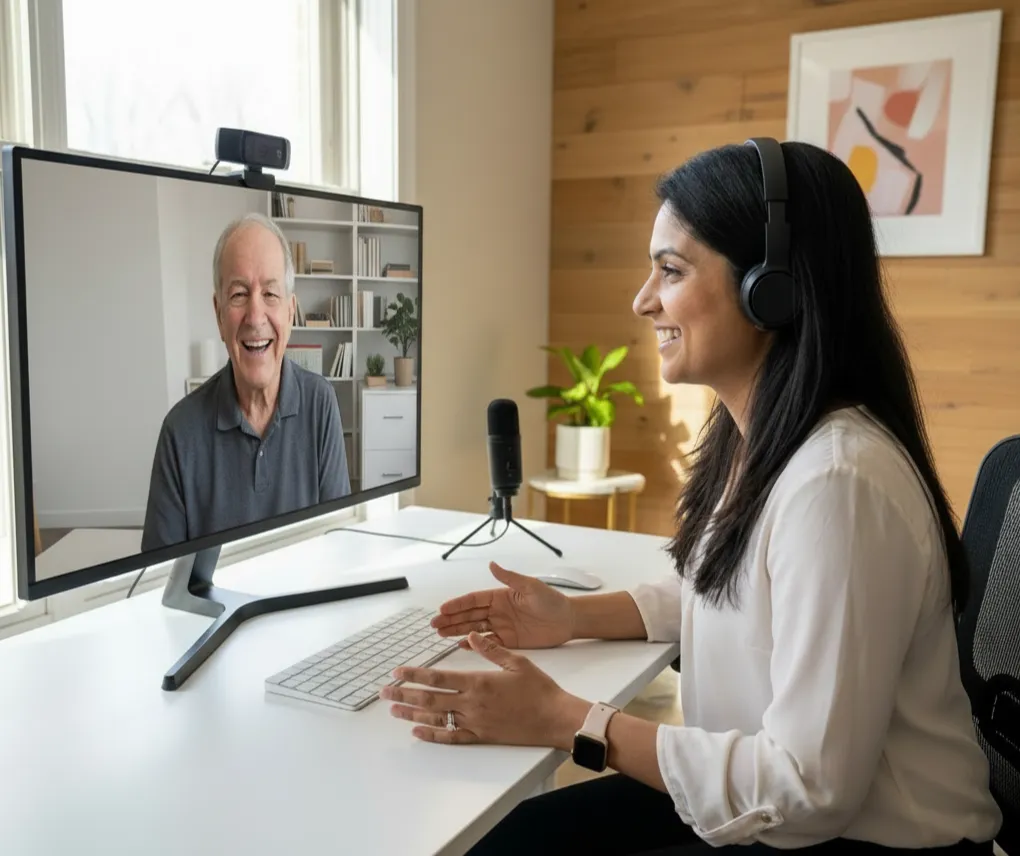
Voice and speech treatment can be delivered by live video.
- No travel on days when movement is harder
- Practice in the place you talk the most: home
- Care partners can join from anywhere
Insurance accepted
Insurance and Medicare for Parkinson’s Speech Therapy
In Texas, we accept BlueCross BlueShield of Texas, Aetna, Curative, Medicare, and UnitedHealthcare Community Plan STAR+PLUS in certain areas. In Florida, we accept Aetna, UnitedHealthcare, and Curative. Self-pay is available in both states.
In Texas

 Including HealthSelect

 STAR+PLUS · in certain areas
Medicare is accepted in Texas: see Medicare speech therapy in Texas.
In Florida
Including Dual CompleteWe accept HSA/FSA funds and provide superbills for out-of-network reimbursement. See insurance details →
We verify your benefits before you begin. See insurance and pricing →
Getting started
Three steps. No waiting room.
- Free consultationA free 15-minute call. Tell us what you are noticing, and ask anything.
- EvaluationA licensed speech-language pathologist finds out what is going on and writes a plan.
- Sessions at homeLive 25 to 30 minute video sessions, at a time that fits your week.
Google reviews
What families say
Ms. Sherry is so amazing. I was skeptical at first of doing virtual therapy but it has helped my little one so much. He has said many new words with Ms. Sherry’s help. We look forward to each session ☺️
Oasis speech did an amazing job with scheduling and communication for my sons sessions. … she was so patient with him and really had him engaged. thanks oasis speech!
Very professional and helpful with my case and situation
We cannot thank Mrs. Sherry Owais enough for the incredible impact she had on our son. From day one, she created a welcoming and supportive environment that instantly put him at ease. She is highly knowledgeable, patient, and truly cares about her patients. Not only did she help our son make amazing progress with his speech, but she also provided our family with great support and strategies to practice at home. We highly recommend her services to anyone seeking speech therapy!
Questions families ask
Parkinson’s Speech Therapy FAQ
When should someone with Parkinson’s start speech therapy?
It is reasonable to ask for an evaluation as soon as voice or speech changes are noticed, or soon after diagnosis.
Can Parkinson’s speech therapy be done online?
Yes. Voice and speech treatment can be delivered by live video. We confirm fit during a free consultation.
Does Medicare cover speech therapy for Parkinson’s?
Medicare Part B covers medically necessary outpatient speech therapy. We accept Medicare in Texas.
Why is my voice getting quieter with Parkinson’s?
Parkinson’s affects the muscles used for breathing and voice, so the voice becomes softer over time. This is called hypophonia. Parkinson’s can also change how loud your own voice feels to you, which is why a spouse or friend often notices before you do.
What is hypokinetic dysarthria?
Hypokinetic dysarthria is the speech pattern most often linked to Parkinson’s disease: a quiet voice, flat or monotone speech, and words that sound rushed or mumbled. Speech therapy works on loudness, breath support and clear speech.
Can a care partner join the sessions?
Yes. Care partners can join from anywhere. Sessions include care partner coaching, including how to cue a louder voice without nagging.
Every Voice Deserves to Be Heard
Book a free 15-minute consultation with a licensed speech-language pathologist. No obligation.