
Autism Speech Therapy
Telehealth speech and language support for autistic children across Florida and Texas, built around each child's strengths.
Your 3-year-old is smart and capable, but they don't talk the way other kids do. Maybe they repeat words or phrases without meaning, or they speak fluently but struggle to have back-and-forth conversations. Perhaps they talk mostly about their own interests and find it hard to read social cues. Or maybe they're verbal but struggle with eye contact, tone of voice, or understanding what others are thinking or feeling.
If your child has autism, you know that communication looks different. And you're looking for support that understands autism and meets your child where they are.
Speech therapy for autism-related communication is not about making your child "less autistic." It's about building the communication skills they need to connect with others, express themselves, and navigate the world in ways that feel more comfortable for them.
What Is Autism-Related Communication?
Autism spectrum disorder (ASD) affects how a child processes information, communicates, and interacts socially. Communication differences in autism are diverse and can look very different from one child to another.
Some autistic children are non-speaking or minimally speaking. They may use gestures, pictures, sign language, or augmentative and alternative communication (AAC) devices to express themselves. Communication still happens — it just doesn't rely on speech.
Other autistic children are verbal and may even speak fluently. But their communication often looks different. They might script or repeat words and phrases they've heard (echolalia). They might talk extensively about their interests but struggle to engage in back-and-forth conversation. They might speak without understanding that others have different thoughts and knowledge than they do.
Many autistic children struggle with social communication specifically. They may find it hard to understand unwritten social rules, read facial expressions or tone of voice, or know when to take turns in conversation. They might stand too close or too far away, struggle with eye contact, or not understand why certain topics are inappropriate in certain contexts.
The key point: autism-related communication differences are part of how an autistic person's brain works. They're not deficits that need to be eliminated. They're differences that benefit from support, understanding, and strategies that help the child communicate and connect in ways that work for them.
How Autism Affects Communication
The communication differences in autism stem from how autistic brains process language and social information. Understanding this helps explain why communication looks the way it does.
Autistic children often have a different relationship with language itself. Words might be very literal. When you say "it's raining cats and dogs," they might picture actual animals falling from the sky. Or they might not automatically understand that words can have multiple meanings depending on context.
Pragmatic language — the social rules of communication — often doesn't come naturally to autistic children. They may not understand why you greet different people differently, or why you don't say exactly what you're thinking even when it's true. These unwritten rules require direct teaching for many autistic kids.
Eye contact, facial expressions, and tone of voice convey meaning in communication, but autistic children often miss these cues or find them confusing. Making eye contact might actually be distracting or uncomfortable for them. This doesn't mean they're not listening or engaging — their brains are just processing differently.
Interests can be intense and all-consuming. An autistic child might talk only about trains, dinosaurs, or their special interest and struggle to engage with topics others care about. Again, this isn't a defect — it's how autistic brains tend to focus and find joy.
Many autistic children also experience sensory sensitivities that affect communication. A loud voice might be overwhelming. Certain words or sounds might feel physically uncomfortable. These sensory experiences shape how and when a child can communicate effectively.
Speech Therapy for Autism: A Different Approach
Speech therapy for autism-related communication looks different than therapy for other speech delays. The goals, methods, and outcomes reflect an understanding of autism as a different way of thinking and communicating, not as something to be corrected or normalized.
The goal is not to make your child less autistic or to force them to communicate in neurotypical ways. Instead, therapy focuses on building communication skills your child needs to express themselves, connect with others, and navigate their world more successfully. This might mean teaching social skills, expanding language, reducing anxiety around communication, or developing strategies that play to your child's strengths.
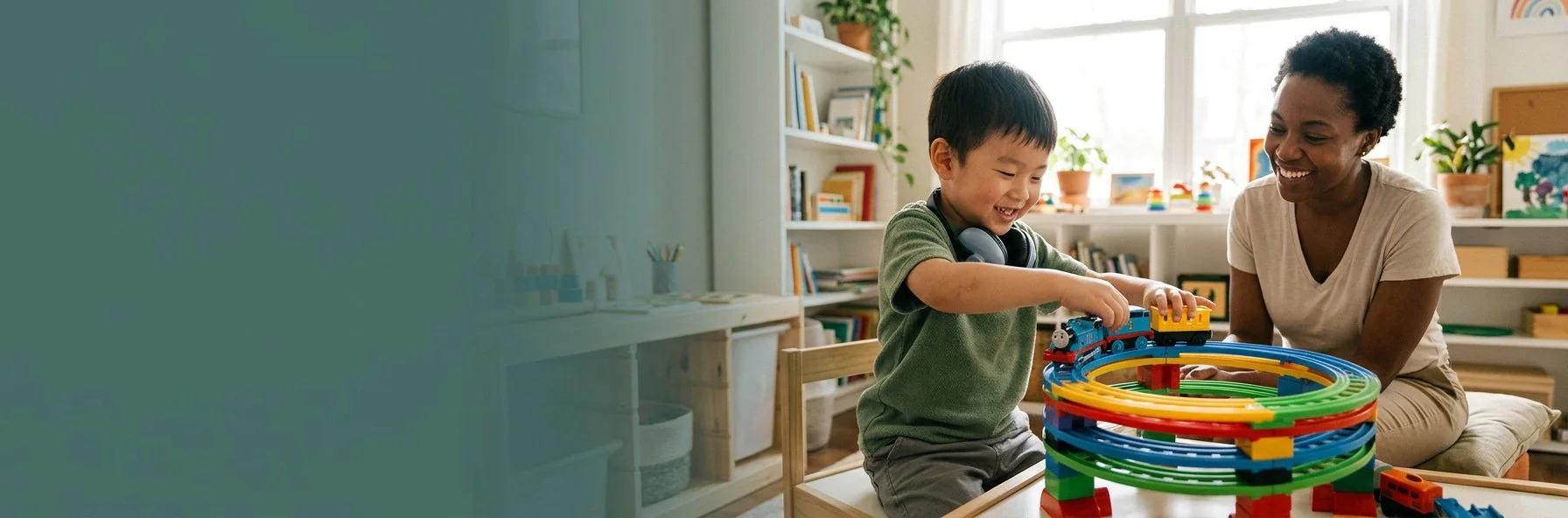
Play-based therapy works particularly well for autistic children. By following your child's lead and interests, a therapist can teach communication skills within activities your child already loves. If your child is obsessed with trains, therapy happens through trains. If they love building, we teach language through building. This approach reduces anxiety and makes learning feel natural rather than forced.
For non-speaking children, we focus on all forms of communication — gestures, pictures, sign language, AAC devices. We're not waiting for speech to develop. We're helping your child communicate right now in the ways that work for their brain.
For speaking children, we might work on social communication skills like taking turns in conversation, understanding others' perspectives, reading facial expressions, or understanding why certain communication is appropriate in certain contexts.
For all autistic children, we honor their communication style while also supporting them in ways that make life easier and more connected.
Recognizing Autism-Related Communication Concerns
Autism often becomes apparent when communication differences show up. Recognizing these early allows for earlier support and better long-term outcomes.
Around 18 to 24 months, you might notice your child isn't responding to their name consistently, or they're not pointing to share your attention or interest in something. They might not be imitating words or actions. They might have words but use them in scripted, repetitive ways rather than to communicate meaning.
By age 2 to 3, autistic children often show very focused interests and might talk only about those interests. They might repeat words or phrases (echolalia) without understanding meaning. They might not engage in pretend play or might engage in very rigid, repetitive play patterns. They might struggle with turn-taking or eye contact.
By age 3 to 4, social communication differences become clearer. Your child might have good language skills but struggle to have conversations. They might not understand jokes, sarcasm, or indirect language. They might not recognize when someone is being kind versus mean, or they might follow rigid social rules they've learned without understanding the purpose behind them. They might have sensory sensitivities that affect when they can communicate.
At any age, if your child is not engaging socially, not responding to their name, not interested in sharing experiences with you, or struggling with communication significantly different from peers, an evaluation can help clarify whether autism might be involved.
The Evaluation Process for Autism-Related Communication
An evaluation for autism-related communication is more comprehensive than a standard speech evaluation because it looks at social communication, play, sensory responses, and patterns of behavior alongside language and speech.
A speech-language pathologist will observe your child during play and conversation, asking how your child engages socially, what their interests are, and whether they share those interests with others. They'll look at how your child plays, whether play is flexible or repetitive, and how they respond to changes or transitions.
An autism evaluation typically involves input from multiple professionals. A developmental pediatrician or psychologist may conduct formal autism screening and assessment. A speech-language pathologist evaluates communication across all domains — spoken language, social communication, understanding language, using language meaningfully.
You'll provide a detailed history about your child's early development, including when they hit milestones and what developmental patterns you've noticed. The professionals will ask about sensory sensitivities, repetitive behaviors, intensity of interests, and how your child responds to changes.
After the evaluation, you'll receive a clear picture of your child's communication strengths and where support would help. A speech-language pathologist does not diagnose autism — that comes from a developmental pediatrician or psychologist — but your child doesn't need a diagnosis to start speech therapy. If you're seeking a diagnosis, we can share our findings with your child's medical team.
Speech Therapy for Autistic Children
Therapy for autism-related communication is individualized and focuses on your child's specific needs and goals.
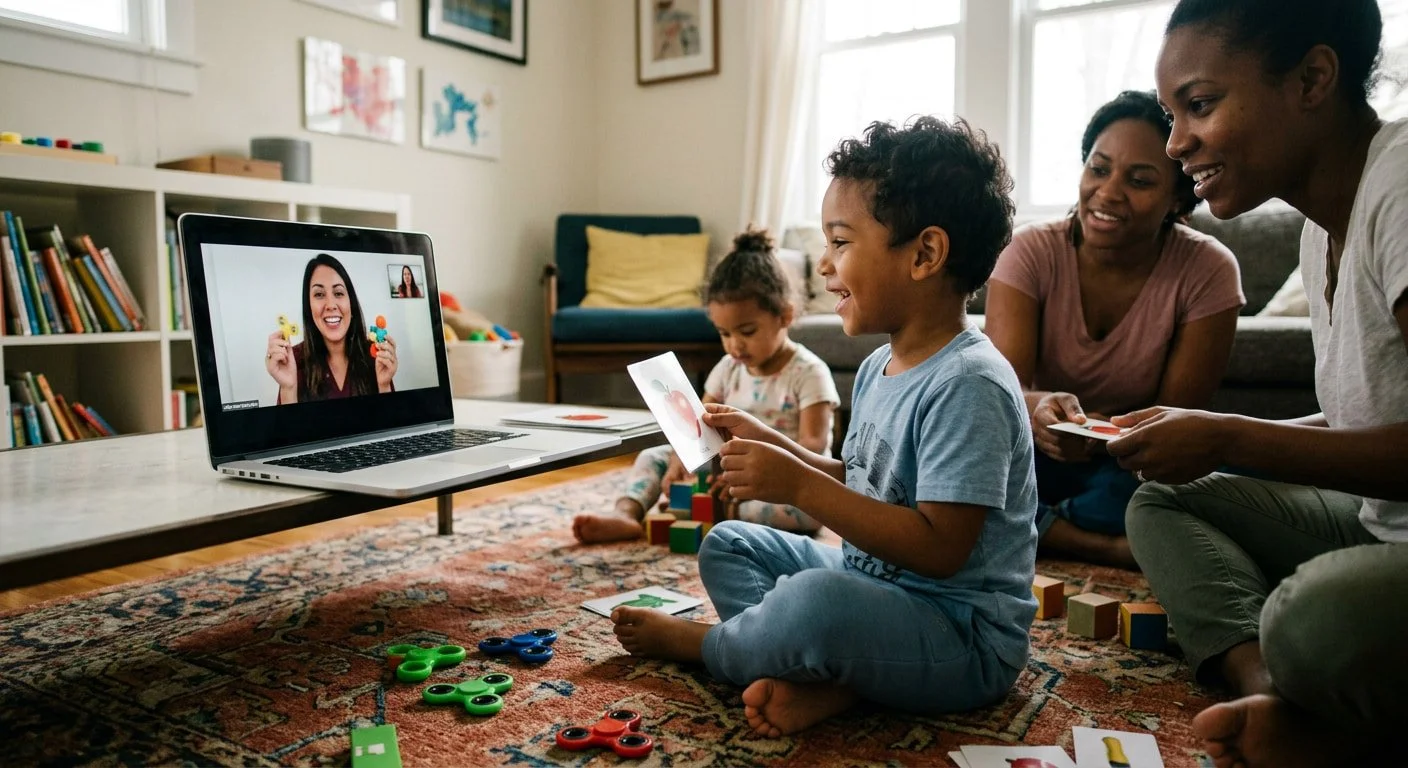
For non-speaking children, therapy builds communication through gestures, sign language, and picture-based systems. If your child already uses an AAC device, we'll support them in using it to communicate during sessions and at home. We teach family members these approaches so communication happens naturally throughout the day, not just in therapy.For speaking children, therapy might focus on making conversations easier. We might teach them about turn-taking in conversation, how to ask questions, or how to recognize when someone is interested versus uninterested in a topic. We teach them to notice facial expressions and tone of voice. We help them understand social rules and why they exist.
Many autistic children benefit from literal, concrete teaching about social communication. We might script social situations so they know what to say in specific contexts. We teach them to recognize patterns in social interaction. We help them understand their own communication style and how it affects others.
If sensory sensitivities get in the way of communication, we adapt sessions to help — a calmer pace, quieter voices, or movement breaks — and may recommend an occupational therapist for additional sensory support.
Why Telehealth Works for Autistic Children
Telehealth speech therapy is particularly effective for autistic children for several important reasons.
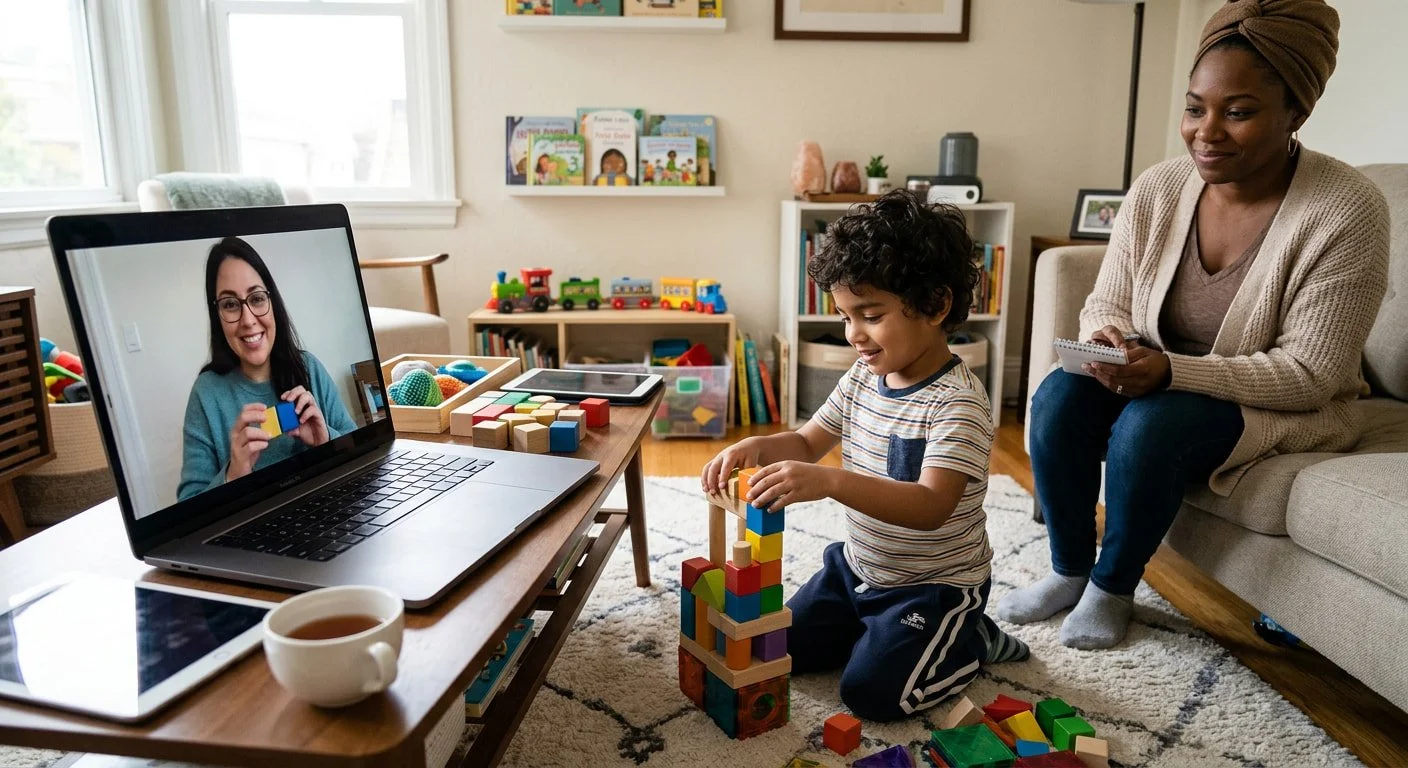
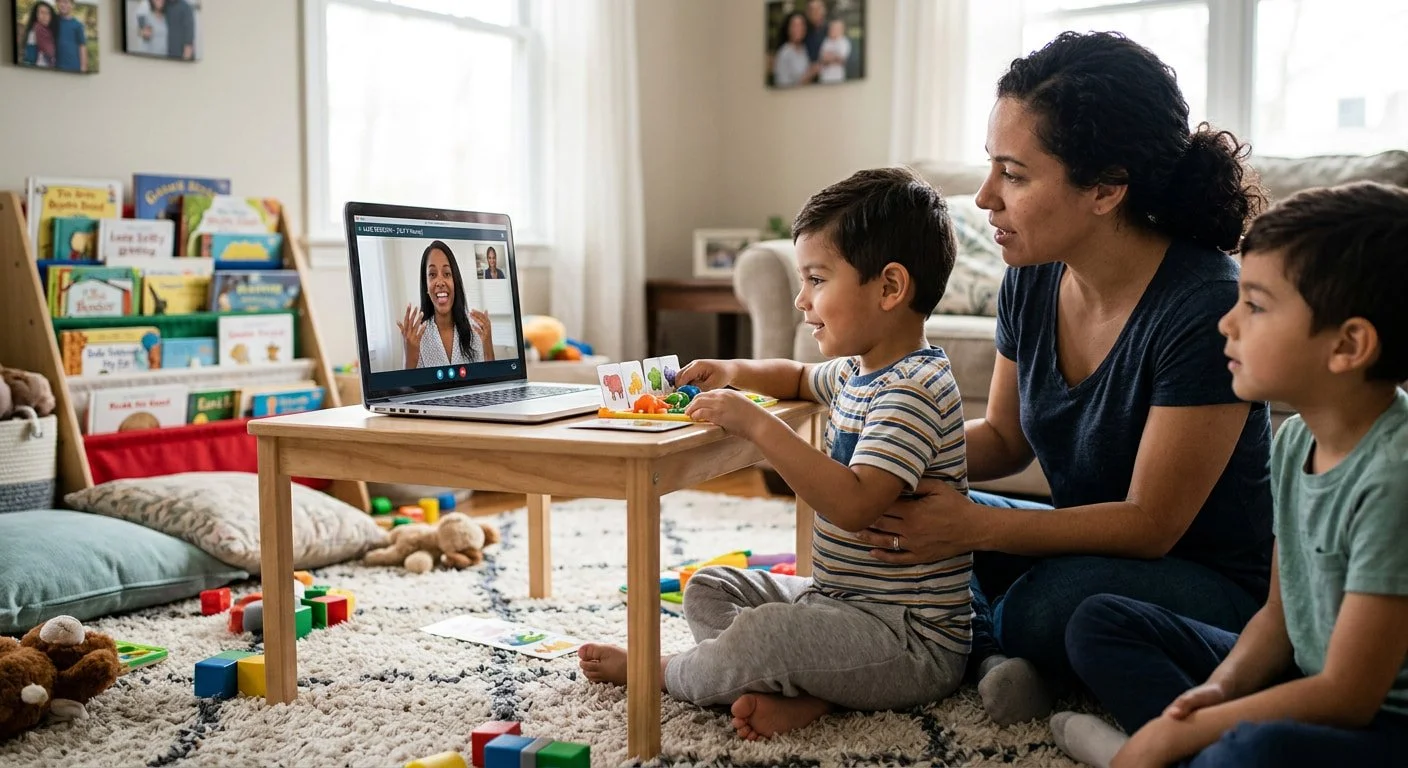
Your child communicates best in familiar environments. Telehealth means therapy happens at home, in their comfort zone, where they're most themselves. There's no anxiety about traveling to an unfamiliar clinic, no sensory overwhelm from waiting rooms. Your child is in the environment where they spend most of their time, which means strategies taught in therapy can be practiced immediately and naturally.
Many autistic children find the transition to unfamiliar places difficult. Telehealth eliminates that barrier to care. Therapy begins as soon as the session starts — no build-up time needed.
Flexible scheduling is crucial for families with autistic children. Sensory-processing differences, anxiety, and the need for routine mean that families often need flexibility in scheduling. Telehealth allows therapy to happen at times that work for your child's patterns and your family's routines.
For non-speaking children who use AAC devices or alternative communication, telehealth allows them to access their communication tools easily. There's no need to transfer between environments.
From a practical standpoint, it eliminates travel time and gives parents access to specialized expertise regardless of where they live. For families managing the demands of supporting an autistic child, telehealth makes quality support more accessible.
The Role of Family in Therapy
For autistic children, family involvement is not just helpful — it's essential. Parents are the primary agents of support and teaching.
The most effective therapy happens when strategies taught in the speech therapy session are practiced throughout the day, in all the natural contexts where your child communicates. This might mean using AAC language during meals, practicing social skills during siblings' play time, or teaching communication during preferred activities.
A good speech-language pathologist teaches you strategies, helps you understand your child's communication style, and coaches you on how to support communication throughout your child's day. You're not just attending therapy appointments — you're learning how to support communication in every moment.
Family-centered therapy also recognizes that you know your child better than anyone. You understand what motivates them, what their interests are, and what times of day they're most able to engage. Therapy is most effective when it builds on that knowledge.
Acceptance and Support
Working with an autistic child on communication means balancing two important things: accepting and celebrating how your child's brain works, while also providing support to help them communicate and connect in ways that matter to them.
Autistic communication differences are not wrong. They're not defects. Your autistic child's brain works the way it works, and that's okay. Speech therapy isn't about erasing autistic traits. It's about providing tools and support so your child can express themselves, learn, connect, and navigate their world successfully.
Some autistic adults speak positively about this distinction: they wanted support with communication and social skills because those things mattered to them, not because there was something wrong with being autistic. They appreciated therapists and family members who helped them while also accepting their autism.
This means celebrating your child's interests, honoring their communication style, while also providing support where they need it. It means helping them learn social rules they want to learn, while accepting that they may never make eye contact or have exactly neurotypical social communication.
It means taking their needs seriously — including sensory needs, anxiety, and the real challenges autism can present — while also recognizing that many autistic people thrive, contribute meaningfully to the world, and live fulfilling lives.
At Oasis Speech, our licensed speech-language pathologist provides online speech therapy for autistic children across Florida and Texas. Not sure where to start? Book a free 15-minute consultation, and we'll talk through your child's needs and next steps together.