

Cognitive communication
Memory slipping. Thinking slower. Organization harder. Your loved one's mind can recover. Telehealth speech therapy helps rebuild thinking skills, restore independence, and reconnect with life — from home.
Your loved one had a traumatic brain injury. Or they're in the early stages of dementia. And now, something unexpected is happening: they can say the words just fine, but they're having trouble organizing thoughts, following conversations, remembering what was just said, or solving problems. They get frustrated because they know something isn't right, but they can't quite explain what.
They're not confused exactly — but their thinking isn't as sharp. Planning is harder. They get lost in conversations. They say things that don't quite make sense. They repeat the same question over and over.
This is cognitive communication disorder. It's different from aphasia (language problems) because the language ability is still there — the problem is with the thinking that supports communication.
With expert support and telehealth speech therapy, many people with cognitive communication disorders improve significantly. Therapy focuses on rebuilding executive function, memory, attention, and the thinking skills that support meaningful communication.

What is Cognitive Communication Disorder?
Cognitive communication refers to the thinking skills that support effective communication: memory, attention, organization, problem-solving, reasoning, and awareness.
A cognitive communication disorder occurs when damage to the brain affects these thinking skills, even though the person can still form sentences and produce language.
Cognitive communication problems can look like:
Memory issues — Difficulty remembering conversations, instructions, or recent events. Repeating the same question or story multiple times. Forgetting what was just said.
Attention problems — Difficulty concentrating in conversations, especially in noisy environments. Getting distracted easily. Trouble following multi-step instructions.
Executive function deficits — Difficulty planning, organizing thoughts, or problem-solving. Trouble with sequencing (putting events in order). Difficulty shifting between topics or tasks.
Word retrieval — Trouble finding the right word, even though they know what they want to say. (Similar to aphasia, but the underlying cause is cognitive, not linguistic.)
Awareness deficits — Lack of insight into their own difficulties. Not recognizing that they're having trouble. This is particularly common in brain injury.
Disorganized thinking — Their thoughts jump around. Stories don't have a clear beginning, middle, or end. Hard to follow their logic.
Impulsivity and filtering — Saying things without thinking, blurting out inappropriate comments, difficulty filtering what they say.
Reasoning and judgment problems — Trouble with abstract thinking, understanding cause-and-effect, or making safe decisions.
These can result from traumatic brain injury (TBI), stroke (when it affects thinking areas), dementia (Alzheimer's, vascular dementia, etc.), Parkinson's disease, brain tumor, or other neurological conditions.
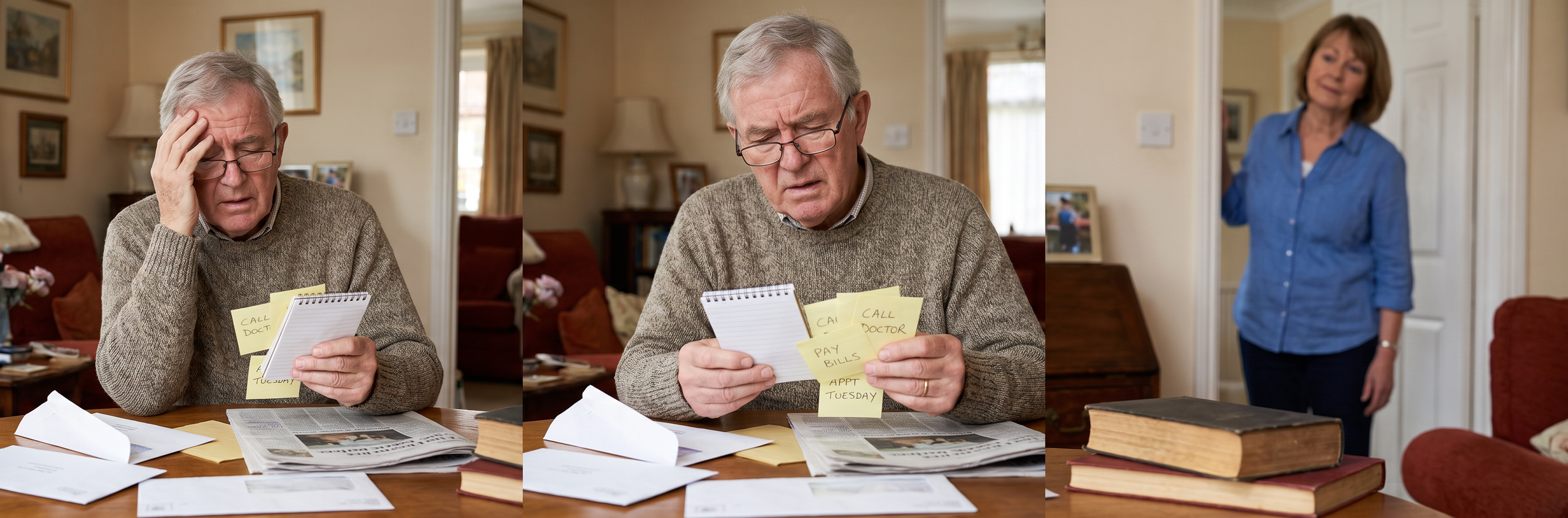
Red Flags: Signs of Cognitive Communication Disorder
Warning signs:
Difficulty following conversations or multi-step instructions
Forgetting what was just said; repeating the same question
Getting lost while telling a story
Trouble organizing thoughts or expressing complex ideas
Problems with attention or concentration, especially in noisy environments
Difficulty with planning, problem-solving, or decision-making
Word-finding difficulties (knowing what they want to say but can't find the word)
Impulsive or inappropriate comments
Lack of awareness that there's a problem ("I'm fine," but clearly struggling)
Difficulty understanding cause-and-effect or abstract concepts
Changes in personality or behavior
Difficulty with reading comprehension or writing
Why Does Cognitive Communication Disorder Happen?
Cognitive communication disorders result from damage to the brain's thinking centers:
Traumatic brain injury (TBI) — Falls, motor vehicle accidents, assaults, or other head trauma damage brain tissue, affecting thinking skills.
Dementia — Progressive neurological diseases (Alzheimer's, vascular dementia, Lewy body dementia) gradually damage brain cells responsible for thinking.
Stroke — Blood flow interruption in thinking or language areas causes damage. Can affect cognition even if language production is intact.
Brain tumor or cancer treatment — Tumors or surgical removal damage brain tissue. Radiation therapy can cause delayed cognitive effects.
Parkinson's disease — Progressive damage to brain structures affects thinking speed and executive function.
Anoxia — Lack of oxygen to the brain (from cardiac arrest, near-drowning, etc.) damages brain tissue.
Infection or illness — Severe infections (encephalitis, meningitis) or other illnesses can cause cognitive damage.
The severity depends on where the damage is located, how extensive it is, and how quickly rehabilitation begins.
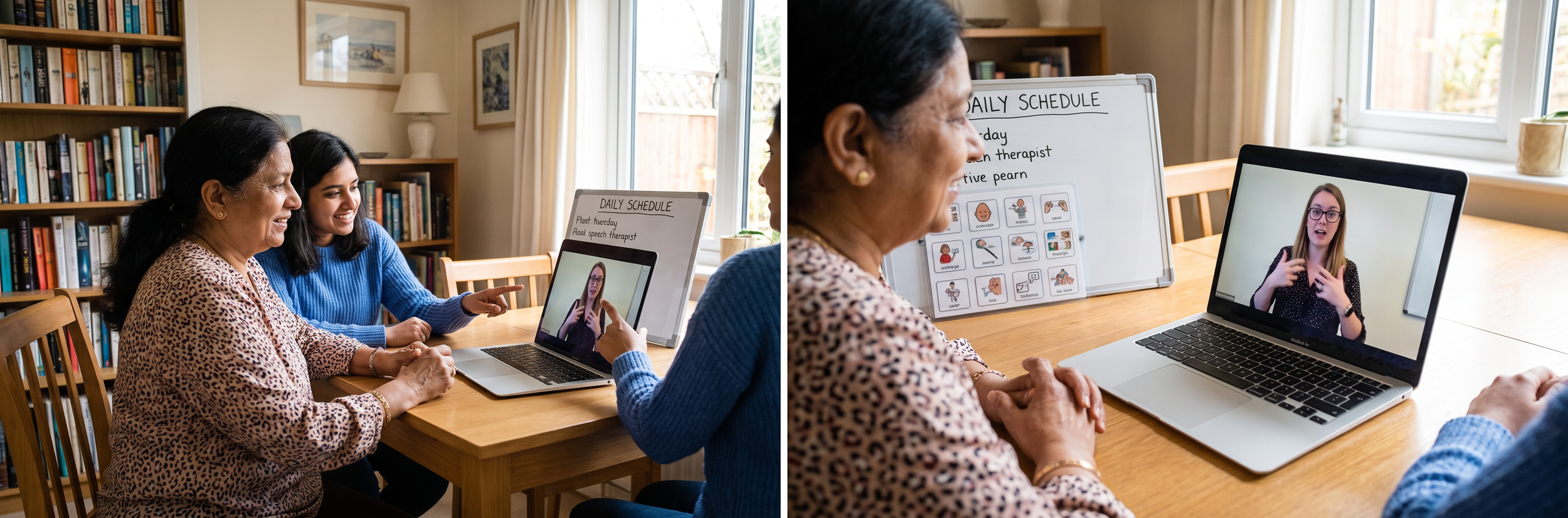
How Telehealth Speech Therapy Helps
Telehealth is highly effective for cognitive communication disorders because:
Therapy targets real-world thinking. Speech therapists work on memory strategies, attention exercises, organization techniques, and problem-solving in contexts that matter to your loved one — not isolated drills.
Family involvement is built in. Cognitive communication therapy works best when family members learn strategies too. Telehealth naturally includes caregivers, who learn how to communicate effectively and support cognitive recovery at home.
Consistent, accessible support. Regular sessions via telehealth mean no missed appointments due to transportation barriers, caregiver fatigue, or mobility issues. Consistency is critical for cognitive recovery.
Your therapist sees real communication. On video, your loved one communicates in their home environment, revealing true challenges and strengths. This gives a clearer picture than clinic-based testing.
Practical strategy training. Rather than abstract exercises, therapy focuses on compensation strategies — memory notebooks, written routines, environmental modifications, communication techniques — that actually improve daily functioning.
Emotional support. Cognitive communication changes can be frightening or frustrating for the person and the family. A skilled therapist provides hope, guidance, and understanding.
Most people with cognitive communication disorders see meaningful improvement with consistent therapy, though progress may be slower than with other speech disorders. Early intervention and family involvement significantly improve outcomes.
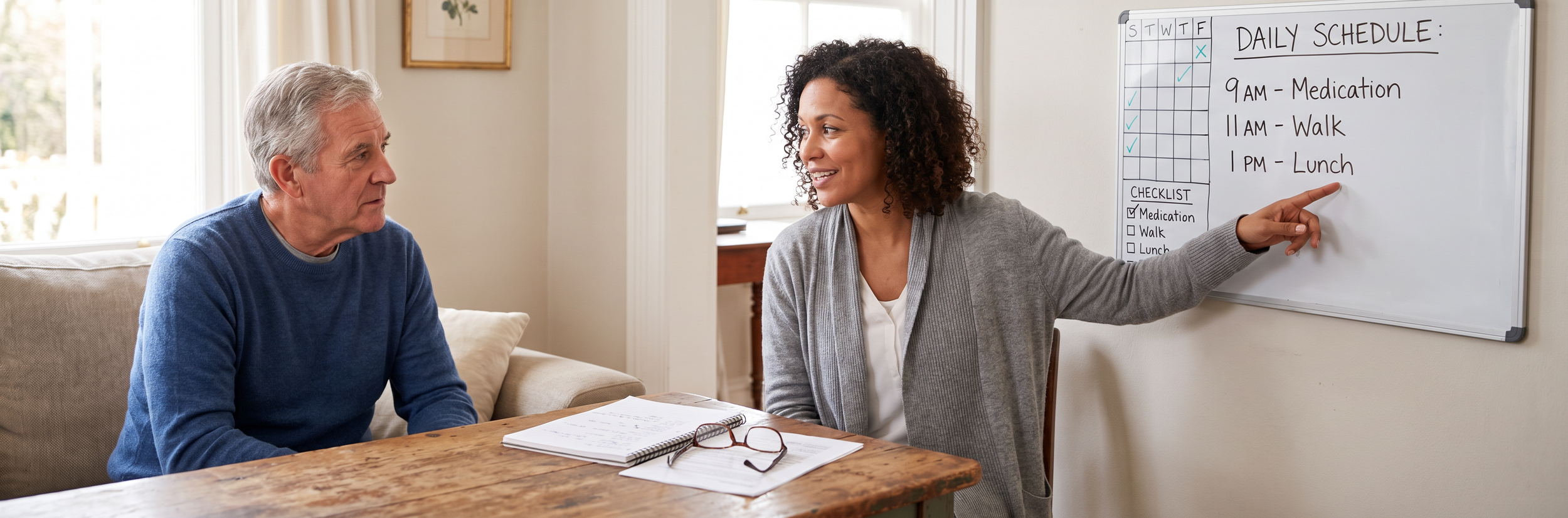
What You Can Do Right Now
While pursuing professional speech therapy:
Be patient. Give your loved one time to process, retrieve information, or express thoughts. Don't rush them or finish sentences.
Use written supports. Write down important information, make lists, and create a daily schedule posted where they can see it.
Simplify your language: shorter sentences, one main idea at a time. Avoid complex grammar or abstract concepts when possible.
Reduce distractions. Have important conversations in quiet environments. Turn off TV and background noise.
Ask yes/no questions. These are easier to process than open-ended questions.
Provide context. When bringing up a topic, remind them of the context first: "Remember, we talked about visiting your sister next week..."
Use multi-sensory input. Combine words with gestures, pictures, or written notes for better understanding.
Celebrate small wins. Recovery is slow but real. Each moment of clarity or connection matters.
Take care of yourself. Caring for someone with cognitive communication changes is emotionally and physically demanding. Find support, take breaks, and don't burn out.
Join a support group. Connecting with others on similar journeys provides understanding and practical tips.
The Bottom Line
Cognitive communication disorders are real, challenging, and treatable. Recovery is possible — especially with early, intensive therapy and strong family involvement. Telehealth speech therapy removes barriers and puts expert guidance directly into your home during the critical recovery period.
Your loved one's thinking can improve. Their ability to communicate meaningfully, engage in conversations, and participate in daily life can be restored or significantly enhanced.
Ready to Get Answers?
At Oasis Speech, we work with adults experiencing cognitive communication changes from brain injury and dementia via telehealth and help rebuild thinking skills and independence — all from the comfort of your home. We complete evaluations within one week and work with families throughout Florida and Texas via secure video sessions. No waiting lists. No commute. No guesswork.
Your loved one will work with Sahar Owais, MS, CCC-SLP, a licensed speech-language pathologist with extensive experience supporting cognitive communication recovery and functional improvement. Sessions are evidence-based, practical, and tailored to your loved one's specific needs and goals. You'll be right there, coached live on how to support cognitive recovery every day through memory strategies, organizational systems, and communication techniques that rebuild thinking skills in real-life moments.