

Aphasia
Your loved one can regain communication. Expert telehealth speech therapy helps stroke and brain injury survivors recover the ability to connect, converse, and reconnect with life — from home.
Your loved one had a stroke. Or a head injury. Or another event that changed everything. And now, something unexpected has happened: they're struggling to find words. They understand what you're saying, but they can't quite get the words out. Or maybe it's the opposite — they have trouble understanding what's being said. Sometimes they speak fluently, but the words don't quite make sense.
This is aphasia. And it's more common than you might think — about 2 million Americans live with aphasia as a result of stroke, traumatic brain injury, or other neurological events.
Here's the hope: Recovery is possible. With intensive, targeted speech therapy — especially when started early — many people with aphasia regain significant communication abilities. Telehealth makes it easier than ever to access expert therapy from home, during the critical recovery window when the brain is most capable of healing.
What is Aphasia?
Aphasia is a language disorder that results from damage to the parts of the brain responsible for language. It most commonly occurs after a stroke, but can also result from traumatic brain injury, tumor, infection, or other neurological conditions.
Important: Aphasia is not a loss of intelligence. People with aphasia still think, reason, and understand the world. They may struggle to retrieve words or express ideas, but their cognition remains intact.
Aphasia can affect:
Speaking — Difficulty finding the right words (word-finding difficulty), speaking in short phrases, omitting small words, or having trouble organizing thoughts into sentences.
Understanding — Difficulty comprehending spoken or written language, especially in complex sentences or noisy environments.
Reading and writing — Problems reading or writing, which often mirror speaking and understanding difficulties.
Repetition — Difficulty repeating words or phrases, even if they understand them.
Naming — Particular trouble retrieving names of specific people, places, or objects.
Types of aphasia include Broca's aphasia (non-fluent, expressive), Wernicke's aphasia (fluent, receptive), global aphasia (affecting both expression and comprehension), and others. The type depends on which areas of the brain are damaged.
Critical: The first few months after a stroke or brain injury represent a "golden window" for recovery. The brain is most neuroplastic — most capable of reorganizing and forming new connections — during this time. Early, intensive therapy during this window significantly improves outcomes.
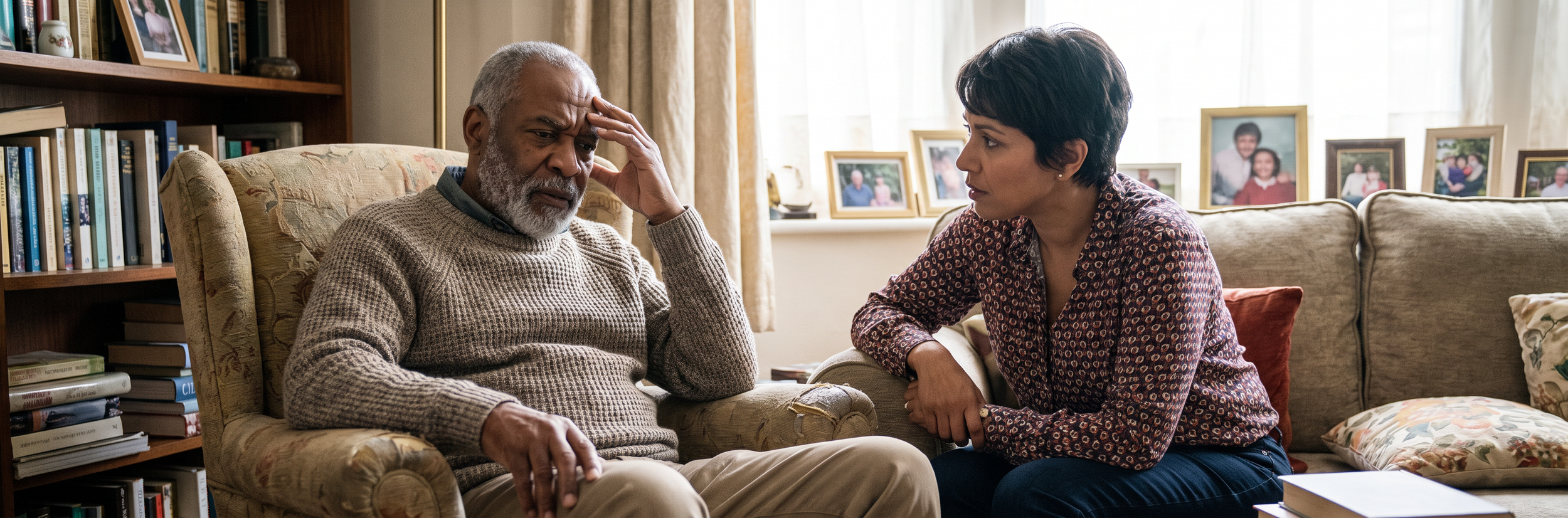
Red Flags: Signs of Aphasia
Immediate warning signs (after stroke, TBI, or brain injury):
Sudden difficulty speaking or finding words
Speaking in short phrases or incomplete sentences
Difficulty understanding spoken language
Using wrong words or nonsensical words
Trouble with reading or writing
Difficulty repeating words or phrases
Repeating the same word or phrase over and over (perseveration)
Frustration or emotional changes related to communication difficulty
Loss of ability to use certain grammatical words ("is," "the," "and")
Important: If someone shows signs of stroke (facial drooping, arm weakness, speech difficulty), call 911 immediately. Prompt medical treatment is critical.
Why Does Aphasia Happen?
Aphasia results from damage to language areas of the brain:
Stroke — The most common cause. A blocked or ruptured blood vessel in the brain prevents blood flow to language areas, causing damage.
Traumatic brain injury — Head trauma from accidents, falls, or assaults can damage language centers.
Brain tumor or cancer treatment — Tumors or surgical removal can affect language areas. Radiation therapy can also cause damage.
Infection or illness — Severe infections, aneurysm, or other conditions can cause brain damage affecting language.
Degenerative disease — Conditions like primary progressive aphasia (a form of dementia) gradually damage language areas.
Seizures — Prolonged seizures can damage brain tissue.
The severity and type of aphasia depends on where the damage occurred, how large the area of damage is, and how quickly rehabilitation begins.

How Telehealth Speech Therapy Helps
Telehealth is highly effective for aphasia recovery because:
Frequent, intensive therapy during the golden window. Research shows that intensive speech therapy in the first months after stroke produces the best outcomes. Telehealth removes barriers to frequency — no commute, no scheduling conflicts, more sessions per week are possible.
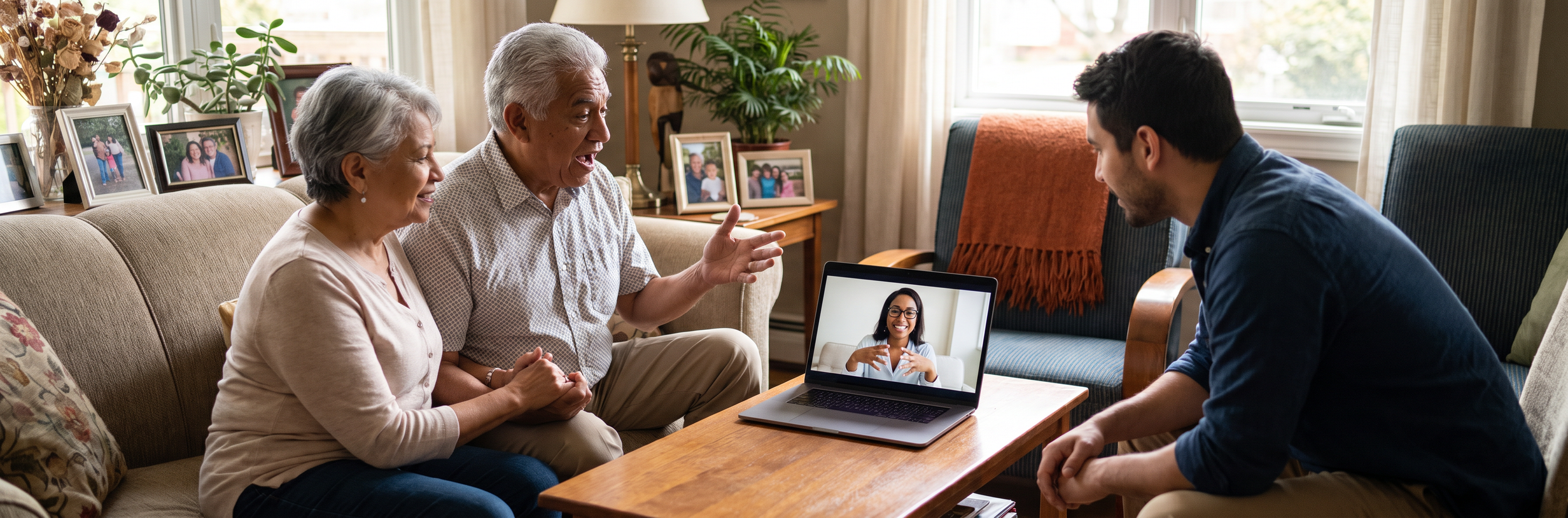
Your therapist sees your real communication. On video, your loved one communicates in their home environment, with family present. This gives a clearer picture than clinic-based assessment of real-world communication abilities and challenges.
Family involvement is built in. Telehealth therapy naturally includes family members. Your speech therapist coaches you on how to communicate with your loved one, how to support language recovery at home, and how to create a communication-rich environment. Family involvement dramatically improves outcomes.
Therapy targets real-life communication. Instead of isolated word drills, telehealth therapy focuses on functional communication: having conversations, telling stories, participating in family discussions. This transfers to daily life.
Consistent, accessible support. Regular sessions without missed appointments due to transportation barriers mean more consistent brain stimulation and better recovery trajectory.
Hope and emotional support. A speech therapist who understands aphasia and believes in recovery provides crucial psychological support during a difficult time.
Most people with aphasia see the most dramatic improvement in the first 3 months post-injury, with continued improvement for 6–12 months or longer. Early, intensive telehealth therapy maximizes this recovery potential.
What You Can Do Right Now
While pursuing professional speech therapy, here's what helps:
Keep talking to your loved one. Communicate normally. Don't "dumb down" your language or speak loudly — people with aphasia have normal hearing and intelligence. Use natural conversation.
Give them time to respond. Don't rush. Silence can feel uncomfortable, but people with aphasia need time to retrieve words. Wait patiently.
Use gestures, drawings, or writing. If speaking is difficult, try other communication methods. Many people with aphasia understand written words better than spoken, or respond to gestures.
Ask yes/no questions when possible. These are easier to answer than open-ended questions. "Do you want coffee?" is easier than "What would you like?"
Be patient with errors. If they use wrong words or make grammatical mistakes, just go with it. They know what they're trying to say; the words are just harder to access.
Include them in conversations. Don't talk about them while they're present. Involve them directly, even if communication is slow or imperfect.
Celebrate small wins. Progress in aphasia recovery is real, even if slow. Every word retrieved is a victory.
Take care of yourself. Stroke or brain injury is traumatic for the whole family. Find support, whether through support groups, counseling, or trusted friends.
The Bottom Line
Aphasia is a real, treatable condition. Recovery is absolutely possible — especially when therapy begins early and is intensive. Telehealth speech therapy removes barriers and puts expert guidance directly into your home during the critical recovery window.
Your loved one's communication can improve. Perhaps not to exactly where it was before — but often to a level where meaningful conversation, connection, and quality of life are restored.
Ready to Get Answers?
At Oasis Speech, we work with adults recovering from stroke and brain injury that cause aphasia via telehealth and help restore communication and connection — all from the comfort of your home. We complete evaluations within one week and work with families throughout Florida and Texas via secure video sessions. No waiting lists. No commute. No guesswork.
Your loved one will work with Sahar Owais, MS, CCC-SLP, a licensed speech-language pathologist with extensive experience supporting aphasia recovery and communication restoration. Sessions are evidence-based, functional, and tailored to your loved one's specific needs and recovery goals. You'll be right there, coached live on how to support communication recovery every day through patient listening, strategic communication techniques, and family-centered strategies that work in real life.