
Early Intervention for Speech Delays: Why Starting Before Age 3 Matters

Your 18-month-old says just a few words. Your 2-year-old isn't putting words together like other kids in the playgroup. Or maybe your pediatrician mentioned "watching and waiting" — but you have a nagging feeling that early help might make a difference.
You're right. The research is clear: early intervention works. Kids who start speech therapy before age 3 show dramatically better outcomes than those who wait.
Here's why the first three years matter so much — and what you can do about it.
The Critical Window: Why Age 3 Is Important
Your child's brain develops fastest in the first few years of life. Between birth and age 3, your child's brain forms roughly 1 million neural connections per second. This is the brain's peak learning period.
Speech and language are part of that development. When a child is exposed to language: hearing it, practicing it, getting feedback, their brain is literally wiring itself for communication.
If speech is delayed during this window, intervention during this time can reshape how the brain develops language.
After age 3, the brain is still developing, but the rate of change slows. This doesn't mean therapy stops working, but the earlier you start, the more you leverage that critical developmental window.
What Counts as a Speech Delay?
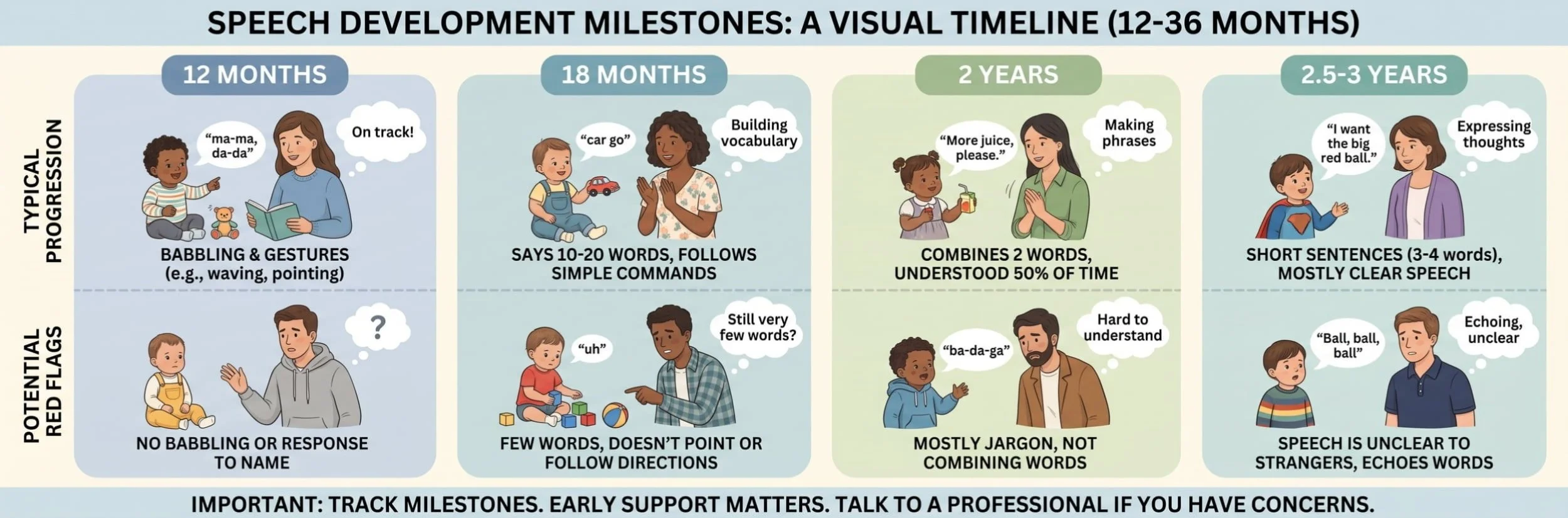
Not all kids talk on the same schedule, but there are red flags:
By 12 months:
No babbling or gesturing (pointing, waving)
No response to their name
By 18 months:
Fewer than 10 words
No understanding of simple words ("mama," "no," "bye")
By 2 years:
Fewer than 50 words
Not combining any words ("more milk," "daddy up")
Loss of skills they once had
By 2.5-3 years:
Speech others can't understand
Not following simple directions
Difficulty with sounds appropriate for their age
If any of this sounds familiar, early evaluation is worth it.
Why Early Intervention Changes Everything
Here's what research shows:
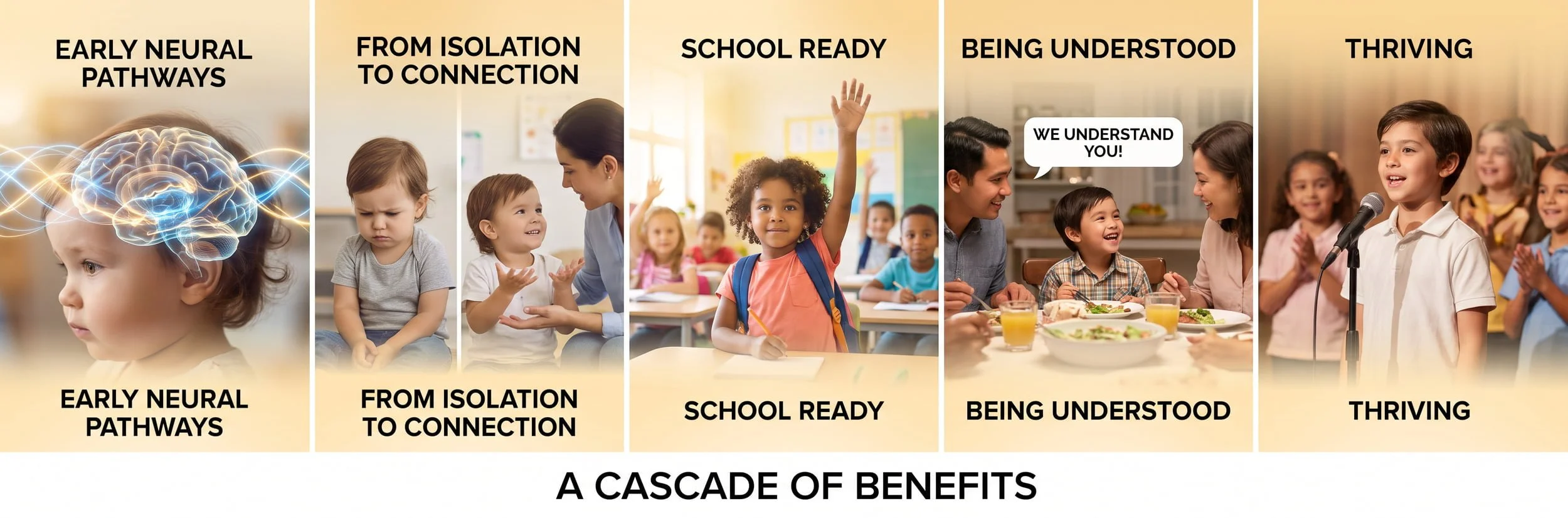
1. Brain Plasticity is Highest: Your child's brain is more able to rewire and adapt in the first three years. Therapy during this window works with the brain's natural learning power.
2. Prevents Compounding Delays: Speech delays don't stay isolated. A child who doesn't talk much hears fewer words. They have fewer conversations. They miss out on social interaction with peers. By preschool, they may fall further behind academically and socially.
Early therapy breaks that cycle.
3. Improves School Readiness: Kids who receive early intervention are more likely to enter kindergarten with age-appropriate language skills. This sets them up for better reading, writing, and academic success.
4. Boosts Confidence: A child who is understood feels more confident. They participate more. They develop stronger relationships with caregivers and peers.
5. Reduces Later Intervention Needs: A child who “catches up” in speech before age 3 often doesn't need ongoing services later. A child who waits may struggle through elementary school.
How Telehealth Fits In
Telehealth is game-changing for early intervention.
Here's why:
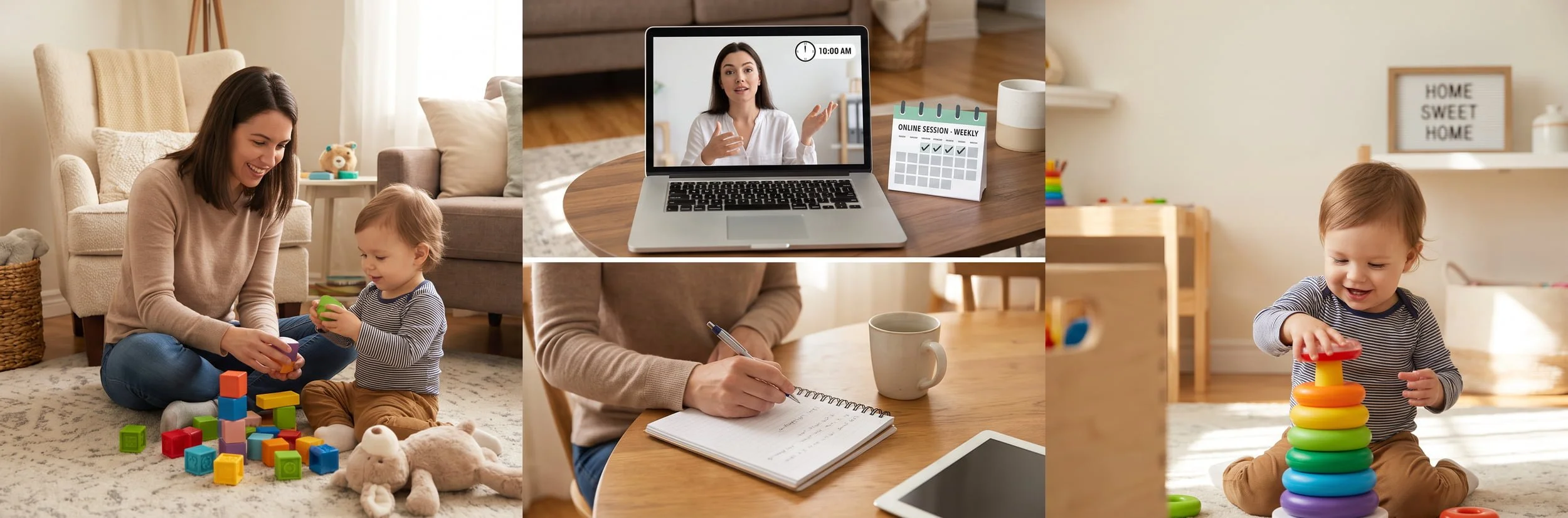
Therapy happens at home, where your child is most comfortable and where language naturally occurs
Parents are coached in real-time on strategies to use all day
No travel time — critical when you have a young child
For a toddler, telehealth therapy often works even better than in-person because the therapist can coach you while you're playing with your child in the actual environment where language development happens.
What to Do Right Now
1. Trust your instinct: if you're concerned about your child's speech, don't wait for the pediatrician's next visit. Reach out for a consultation.
2. Get a speech evaluation: an evaluation tells you exactly where your child stands and what, if anything, they need.
3. Start early intervention (if recommended): don't "wait and see." Early intervention is proven, and the window is limited.
4. Get involved: the most effective early intervention includes you. A therapist can show you strategies to use during everyday routines: meals, bath time, and playtime.
The Bottom Line
The first three years are precious not just for bonding and development, but for language. Early intervention during this window can literally reshape your child's communication, confidence, and academic future. Starting early isn't just better, it's transformational.
Therapy That Fits Your Life
No commute. Flexible scheduling. Sessions from home. Your child gets the support they need without your family sacrificing everything else.
Book Your Free Consultation →Continue Reading
→ How Telehealth Speech Therapy Works — A Step-by-Step Guide (Week 5 Blog)
→ Is Online Speech Therapy as Effective as In-Person? What the Research Says (Week 6 Blog)