
Dyslexia and Literacy Support for Children (Online)
Helping kids hear the sounds in wordssound out new wordsspell with confidenceunderstand what they read
Online dyslexia speech therapy and reading support for children across Texas and Florida, building phonological awareness, reading and spelling.
Evening and weekend therapy appointments available

“She was so patient with him and really had him engaged.”
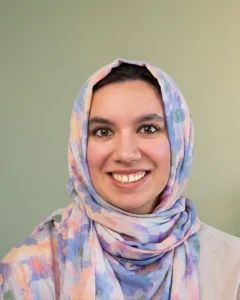
Your therapist
Sherry Owais, M.A., CCC-SLPLicensed speech-language pathologist in Texas and Florida.On this page
Key points
Dyslexia and reading difficulties, in brief
- Dyslexia is a common, language-based learning difference that affects reading, spelling, and sometimes writing.
- Dyslexia has nothing to do with intelligence.
- Reading is built on spoken language. This is why speech-language pathologists play an important role in literacy.
- Your child doesn’t need a formal diagnosis to start therapy.
Your child is bright, curious, and full of ideas — but reading feels like a constant struggle. Maybe they guess at words instead of sounding them out. Maybe spelling tests end in tears, or homework that should take ten minutes takes an hour.
You might be hearing “they’ll catch up” or “they just need to try harder.” But you know your child is trying.
Reading difficulties are common, and they’re not a sign that your child isn’t smart. Many are rooted in how the brain processes the sounds and structure of language — and that’s exactly where speech-language therapy can help.
The basics
What Is Dyslexia?
Dyslexia is a common, language-based learning difference that affects reading, spelling, and sometimes writing. Children with dyslexia often have difficulty connecting letters to the sounds they represent, which makes decoding (sounding out words) and spelling challenging.
Not every child who struggles with reading has dyslexia.
Reading difficulties can also come from:
- Weaker vocabulary
- Trouble understanding sentences
- Challenges with written expression
A careful evaluation helps clarify what’s behind your child’s struggles — so support targets the right skills.
Why an SLP
How Speech and Language Connect to Reading: Phonological Awareness
Reading is built on spoken language. Before children can read words, they need to hear and play with the sounds inside words — a skill called phonological awareness.
They need to know that “cat” has three sounds, that “cat” and “hat” rhyme, and that changing one sound makes a new word.
Try it yourself
The sound games behind reading
1How many sounds do you hear in “cat”?
2Which word rhymes with “cat”?
3Change the first sound in “cat” to “b”. What is the new word?
That was phonological awareness. Easy for you, and hard work for many children with reading difficulties. It is one of the first things we check.
Children who had speech or language delays when they were younger are more likely to have reading difficulties later.
The same skills that support talking also support reading and writing.
This is why speech-language pathologists play an important role in literacy. We work on the underlying language skills that make reading, spelling, and writing possible.
Signs by age
Signs of Dyslexia and Reading Difficulties
Early signs of reading trouble look different at each stage of school.
- Trouble learning letter names and sounds
- Difficulty with rhyming
- Trouble remembering nursery rhymes or songs
- A history of speech delays
- Difficulty sounding out simple words
- Mixing up letter sounds
- Guessing at words based on pictures or the first letter
- Avoiding reading activities
- Slow, effortful reading
- Frequent spelling errors (even on familiar words)
- Trouble remembering sight words
- Difficulty understanding what was read
- Writing that doesn’t match how well your child expresses ideas out loud
- Frustration, avoidance, or anxiety around reading and homework
- A family history of dyslexia or reading difficulties
Trust your instincts. If reading is a constant struggle despite effort, an evaluation can help you understand why — and what will help.
This list is a guide, not a diagnosis.
The evaluation
What a Literacy Evaluation Looks Like

A speech-language and literacy evaluation looks at the skills underneath reading:
Much of it feels like games and activities, so your child stays comfortable. You’ll also share your child’s history — early speech and language development, school concerns, and any family history of reading difficulties.
After the evaluation, you’ll receive a written report explaining your child’s strengths, the specific skills that need support, and recommended next steps.
Your child doesn’t need a formal diagnosis to start therapy.
In sessions
How Speech Therapy Supports Reading and Spelling
Therapy is individualized to your child’s evaluation results and focuses on the specific skills holding them back. Depending on your child’s needs, therapy may target:
- Phonological awarenessHearing, blending, and breaking apart sounds in words.
- Phonics and decodingConnecting letters and sounds to read words accurately.
- SpellingUnderstanding sound patterns and spelling rules instead of memorizing word lists.
- Vocabulary and comprehensionUnderstanding what words and sentences mean, so reading makes sense.
- Written expressionOrganizing ideas into clear sentences and paragraphs.
Telehealth
How Telehealth Works for Literacy Support
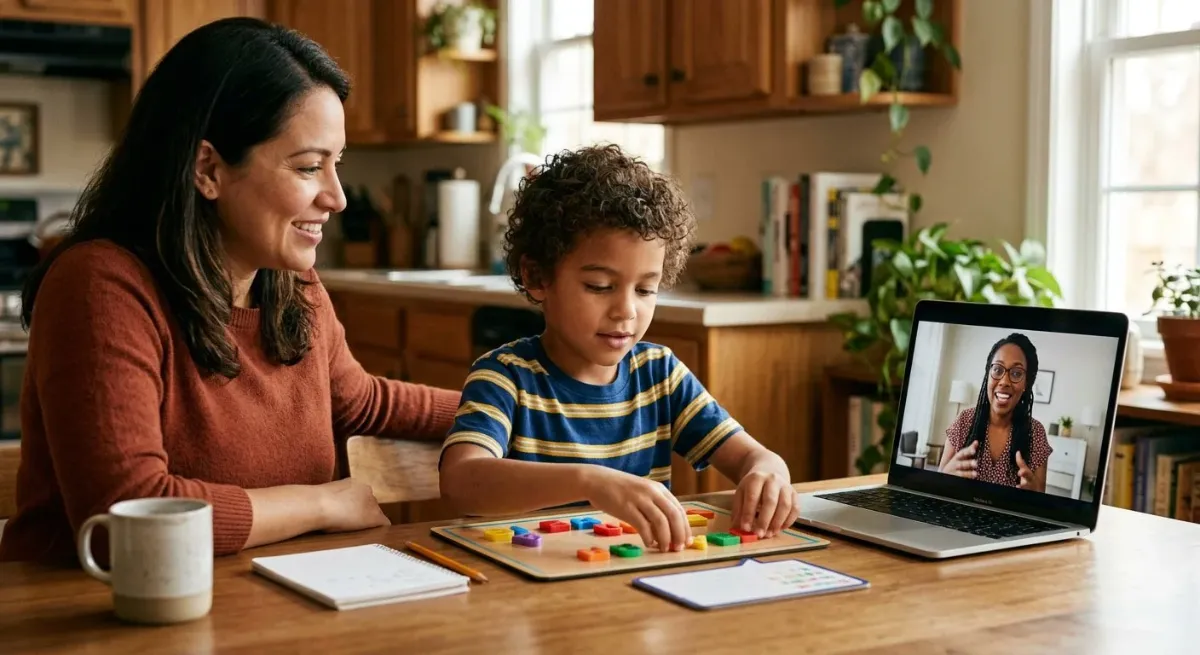
Telehealth works especially well for literacy therapy.
- Digital letter tiles
- Interactive games
- Shared screens
Digital letter tiles, interactive games, and shared screens make reading and spelling practice engaging and hands-on. Your child works from home, at their own desk, without the stress of an unfamiliar setting.
You’ll see exactly what your child is working on, so you can reinforce the same skills during homework and reading time. Flexible scheduling also makes it easier to fit sessions around school and activities.
At Oasis Speech, our licensed speech-language pathologist provides online literacy and language support for children across Texas and Florida. Not sure where to start? Book a free 15-minute consultation, and we’ll talk through your concerns and next steps together.
School
Working with Your Child’s School
Many children with reading difficulties also receive support at school. We’re happy to work alongside your child’s school team.
At home
What You Can Do at Home
Five small habits that support reading between sessions.
- Read together every day.Take turns reading, or read aloud to your child. Hearing fluent reading builds vocabulary and a love of stories — even when reading on their own is hard.
- Play with sounds.Rhyming games, “I spy something that starts with /b/,” and clapping syllables all build the sound skills that support reading.
- Focus on effort, not speed.Praise your child for working through tricky words. Confidence matters as much as skills.
- Use audiobooks.Listening to books lets your child enjoy stories and learn new words while their reading skills catch up.
- Keep homework calm and short.Short, focused practice works better than long, frustrating sessions.
Insurance accepted
Insurance and Self-Pay for Literacy Support in Texas and Florida
In Texas, we accept STAR, STAR Kids, and CHIP plans through UnitedHealthcare Community Plan and BCBS of Texas in certain areas, plus BlueCross BlueShield of Texas, Aetna, and Curative. In Florida, we accept Aetna, UnitedHealthcare, Curative, and Step Up For Students.
In Texas

 Including HealthSelect

 Traditional Texas Medicaid



Medicaid plans vary by county. Check yours with our Texas Medicaid and CHIP plan checker, or see insurance details →
In Florida
 Including Dual Complete
 Step Up For Students
We aren’t in network with Florida Medicaid or Florida KidCare plans right now. We accept HSA/FSA funds and provide superbills for out-of-network reimbursement. See insurance details →
We verify your benefits before the evaluation and tell you what to expect. Self-pay is available in both states. See insurance and pricing →
Getting started
Three steps. No waiting room.
- Free consultationA free 15-minute call. Tell us what you are noticing, and ask anything.
- EvaluationA licensed speech-language pathologist finds out what is going on and writes a plan.
- Sessions at homeLive 25 to 30 minute video sessions, at a time that fits your week.
Google reviews
What families say
We cannot thank Mrs. Sherry Owais enough for the incredible impact she had on our son. From day one, she created a welcoming and supportive environment that instantly put him at ease. She is highly knowledgeable, patient, and truly cares about her patients. Not only did she help our son make amazing progress with his speech, but she also provided our family with great support and strategies to practice at home. We highly recommend her services to anyone seeking speech therapy!
Ms. Sherry is so amazing. I was skeptical at first of doing virtual therapy but it has helped my little one so much. He has said many new words with Ms. Sherry’s help. We look forward to each session ☺️
Very professional and helpful with my case and situation
Oasis speech did an amazing job with scheduling and communication for my sons sessions. … she was so patient with him and really had him engaged. thanks oasis speech!
Questions parents ask
Dyslexia and Literacy Support FAQ
Can a speech-language pathologist help with dyslexia?
Yes. Reading is built on language. SLPs work on the sound awareness, sound-letter connections, vocabulary and comprehension that support reading and spelling.
What are early signs of dyslexia?
Trouble rhyming, learning letter names and sounds, sounding out words, and slow, effortful reading. A family history of reading difficulty is also a sign.
Can literacy therapy be done online?
Yes. Structured literacy lessons work well by video with shared screens and digital letter tiles.
Do you diagnose dyslexia?
We evaluate the language and literacy skills behind reading and share results with you. Talk with us about what a school or psychologist evaluation can add.
What is phonological awareness?
Phonological awareness is the ability to hear and play with the sounds inside words: knowing that “cat” has three sounds, that “cat” and “hat” rhyme, and that changing one sound makes a new word. Children need it before they can read words.
Does my child need a dyslexia diagnosis to start therapy?
No. A formal dyslexia diagnosis typically comes from a psychologist or educational diagnostician, but your child does not need one to start therapy. Our evaluation identifies the language and literacy skills that need support.
What is the difference between dyslexia tutoring and speech-language therapy?
Tutoring usually practices reading and schoolwork. A speech-language pathologist evaluates and treats the language skills underneath reading: phonological awareness, letter-sound knowledge, decoding, spelling, vocabulary, comprehension and written expression. Some children benefit from both.
Every Voice Deserves to Be Heard
Book a free 15-minute consultation with a licensed speech-language pathologist. No obligation.