Autism Speech Therapy for Children
Helping autistic children be understoodask for what they needconnect with otherscommunicate their own way
Online autism speech therapy for speaking and non-speaking autistic children across Texas and Florida, built around each child’s strengths.
Evening and weekend therapy appointments available
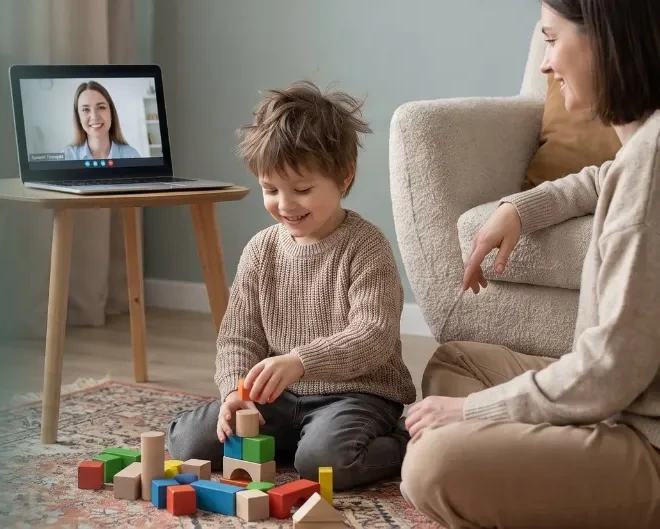
“From day one, she created a welcoming and supportive environment that instantly put him at ease.”
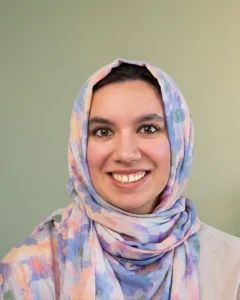
Your therapist
Sherry Owais, M.A., CCC-SLPLicensed speech-language pathologist in Texas and Florida.On this page
Key points
Autism and communication, in brief
- Therapy is not about making a child “less autistic.” It builds the communication skills your child needs to express themselves and connect with others.
- For non-speaking children, every form of communication counts: gestures, pictures, sign language and AAC devices.
- Play-based sessions follow your child’s lead and interests.
- At any age, an evaluation can help if your child’s communication is very different from that of peers.
Your 3-year-old is smart and capable, but they don’t talk the way other kids do. Maybe they repeat words or phrases without meaning, or they speak fluently but struggle to have back-and-forth conversations. Perhaps they talk mostly about their own interests and find it hard to read social cues. Or maybe they’re verbal but struggle with eye contact, tone of voice, or understanding what others are thinking or feeling.
If your child has autism, you know that communication looks different. And you’re looking for support that understands autism and meets your child where they are.
Speech therapy for autism-related communication is not about making your child “less autistic.” It’s about building the communication skills they need to connect with others, express themselves, and navigate the world in ways that feel more comfortable for them.
The basics
What Is Autism-Related Communication?
Autism spectrum disorder (ASD) affects how a child processes information, communicates, and interacts socially. Communication differences in autism are diverse and can look very different from one child to another.
Which sounds most like your child? Tap one.
Some autistic children are non-speaking or minimally speaking. They may use gestures, pictures, sign language, or augmentative and alternative communication (AAC) devices to express themselves. Communication still happens — it just doesn’t rely on speech.
How speech therapy helps
For non-speaking children, we focus on all forms of communication — gestures, pictures, sign language, AAC devices. We’re not waiting for speech to develop. We’re helping your child communicate right now in the ways that work for their brain.
Other autistic children are verbal and may even speak fluently. But their communication often looks different. They might script or repeat words and phrases they’ve heard (echolalia). They might talk extensively about their interests but struggle to engage in back-and-forth conversation. They might speak without understanding that others have different thoughts and knowledge than they do.
Gestalt Language Processing
Some autistic children learn language in whole chunks first. They repeat full phrases from songs, shows, or things adults say, often called echolalia or scripting. These children are gestalt language processors. The phrases are meaningful to them, and over time they learn to break them into smaller pieces and build their own sentences.
Gestalt language processing therapy follows that path instead of pushing single words. Our SLP specializes in working with gestalt language processors and coaches parents on how to respond to and model phrases at home.
Many autistic children learn language in whole phrases and scripts. Learn how therapy supports this on our gestalt language processing page.
Many autistic children struggle with social communication specifically. They may find it hard to understand unwritten social rules, read facial expressions or tone of voice, or know when to take turns in conversation. They might stand too close or too far away, struggle with eye contact, or not understand why certain topics are inappropriate in certain contexts.
How speech therapy helps
For speaking children, we might work on social communication skills like taking turns in conversation, understanding others’ perspectives, reading facial expressions, or understanding why certain communication is appropriate in certain contexts.
The key point: autism-related communication differences are part of how an autistic person’s brain works. They’re not deficits that need to be eliminated. They’re differences that benefit from support, understanding, and strategies that help the child communicate and connect in ways that work for them.
For all autistic children, we honor their communication style while also supporting them in ways that make life easier and more connected.
Why it looks different
How Autism Affects Communication
The communication differences in autism stem from how autistic brains process language and social information. Understanding this helps explain why communication looks the way it does.
- Literal languageAutistic children often have a different relationship with language itself. Words might be very literal. When you say “it’s raining cats and dogs,” they might picture actual animals falling from the sky. Or they might not automatically understand that words can have multiple meanings depending on context.
- Social rulesPragmatic language — the social rules of communication — often doesn’t come naturally to autistic children. They may not understand why you greet different people differently, or why you don’t say exactly what you’re thinking even when it’s true. These unwritten rules require direct teaching for many autistic kids.
- Eye contact and toneEye contact, facial expressions, and tone of voice convey meaning in communication, but autistic children often miss these cues or find them confusing. Making eye contact might actually be distracting or uncomfortable for them. This doesn’t mean they’re not listening or engaging — their brains are just processing differently.
- Deep interestsInterests can be intense and all-consuming. An autistic child might talk only about trains, dinosaurs, or their special interest and struggle to engage with topics others care about. Again, this isn’t a defect — it’s how autistic brains tend to focus and find joy.
- Sensory sensitivitiesMany autistic children also experience sensory sensitivities that affect communication. A loud voice might be overwhelming. Certain words or sounds might feel physically uncomfortable. These sensory experiences shape how and when a child can communicate effectively.
Our approach
Speech Therapy for Autism: A Different Approach
Speech therapy for autism-related communication looks different than therapy for other speech delays. The goals, methods, and outcomes reflect an understanding of autism as a different way of thinking and communicating, not as something to be corrected or normalized.
This might mean:
- Teaching social skills
- Expanding language
- Reducing anxiety around communication
- Developing strategies that play to your child’s strengths
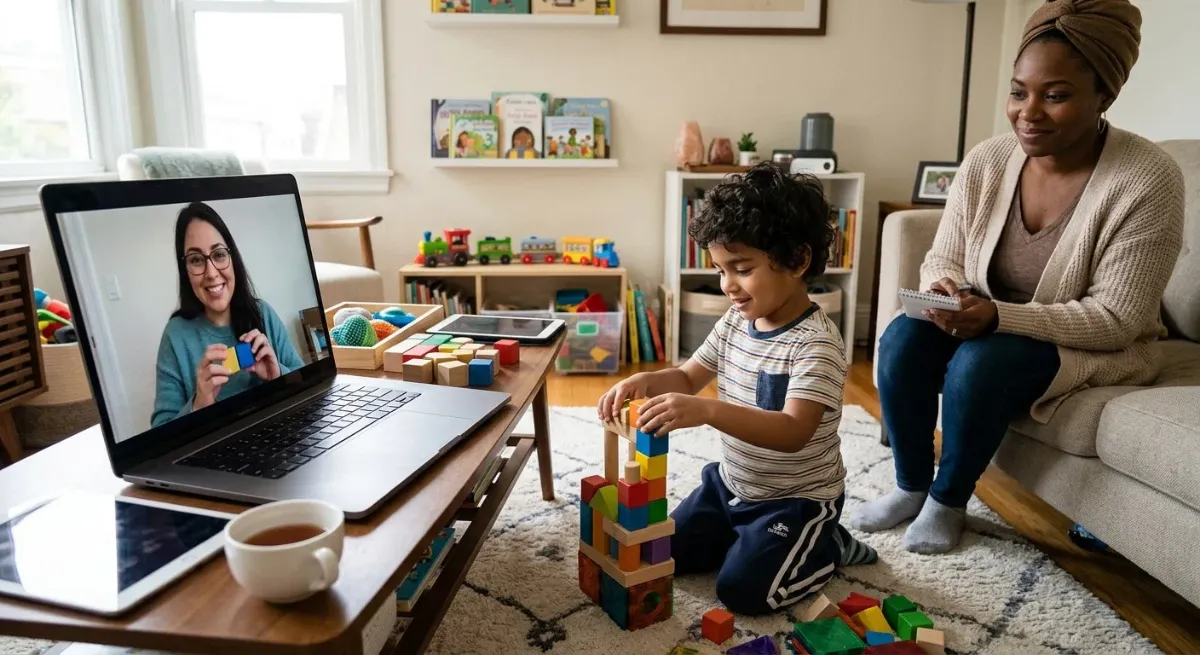
Play-based therapy, led by your child’s interests
Play-based therapy works particularly well for autistic children. By following your child’s lead and interests, a therapist can teach communication skills within activities your child already loves.
This approach reduces anxiety and makes learning feel natural rather than forced.
Speech Therapy for Autistic Children
Therapy for autism-related communication is individualized and focuses on your child’s specific needs and goals.
- Easier conversationsFor speaking children, therapy might focus on making conversations easier. We might teach them about turn-taking in conversation, how to ask questions, or how to recognize when someone is interested versus uninterested in a topic. We teach them to notice facial expressions and tone of voice. We help them understand social rules and why they exist.
- Literal, concrete teachingMany autistic children benefit from literal, concrete teaching about social communication. We might script social situations so they know what to say in specific contexts. We teach them to recognize patterns in social interaction. We help them understand their own communication style and how it affects others.
- Sessions that adapt to sensory needsIf sensory sensitivities get in the way of communication, we adapt sessions to help — a calmer pace, quieter voices, or movement breaks — and may recommend an occupational therapist for additional sensory support.
Signs by age
Recognizing Autism-Related Communication Concerns
Autism often becomes apparent when communication differences show up. Recognizing these early allows for earlier support and better long-term outcomes.
- Around 18 to 24 monthsNot responding to their name consistentlyNot pointing to share attentionNot imitating words or actionsWords used in scripted, repetitive ways
Around 18 to 24 months, you might notice your child isn’t responding to their name consistently, or they’re not pointing to share your attention or interest in something. They might not be imitating words or actions. They might have words but use them in scripted, repetitive ways rather than to communicate meaning.
- By age 2 to 3Very focused interestsRepeating words or phrases (echolalia)Rigid, repetitive playTurn-taking or eye contact is hard
By age 2 to 3, autistic children often show very focused interests and might talk only about those interests. They might repeat words or phrases (echolalia) without understanding meaning. They might not engage in pretend play or might engage in very rigid, repetitive play patterns. They might struggle with turn-taking or eye contact.
- By age 3 to 4Good language, but conversations are hardMisses jokes, sarcasm or indirect languageRigid social rulesSensory sensitivities
By age 3 to 4, social communication differences become clearer. Your child might have good language skills but struggle to have conversations. They might not understand jokes, sarcasm, or indirect language. They might not recognize when someone is being kind versus mean, or they might follow rigid social rules they’ve learned without understanding the purpose behind them. They might have sensory sensitivities that affect when they can communicate.
- At any ageNot engaging sociallyNot sharing experiences with youCommunication very different from peers
At any age, if your child is not engaging socially, not responding to their name, not interested in sharing experiences with you, or struggling with communication significantly different from peers, an evaluation can help clarify whether autism might be involved.
Noticing some of these? A free 15-minute call is a simple first step.
Book Free ConsultationThis list is a guide, not a diagnosis. A speech-language pathologist does not diagnose autism.
The evaluation
The Evaluation Process for Autism-Related Communication
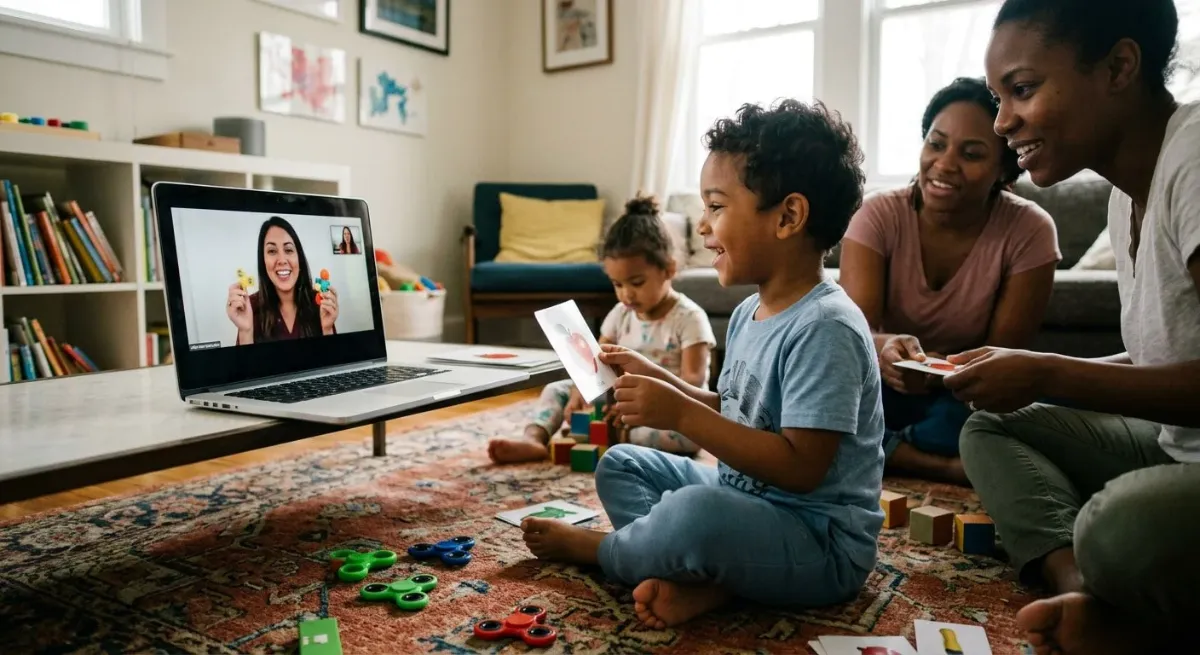
An evaluation for autism-related communication is more comprehensive than a standard speech evaluation because it looks at social communication, play, sensory responses, and patterns of behavior alongside language and speech.
- Play and conversationA speech-language pathologist will observe your child during play and conversation, asking how your child engages socially, what their interests are, and whether they share those interests with others. They’ll look at how your child plays, whether play is flexible or repetitive, and how they respond to changes or transitions.
- Input from more than one professionalAn autism evaluation typically involves input from multiple professionals. A developmental pediatrician or psychologist may conduct formal autism screening and assessment. A speech-language pathologist evaluates communication across all domains — spoken language, social communication, understanding language, using language meaningfully.
- Your child’s historyYou’ll provide a detailed history about your child’s early development, including when they hit milestones and what developmental patterns you’ve noticed. The professionals will ask about sensory sensitivities, repetitive behaviors, intensity of interests, and how your child responds to changes.
- A clear picture of strengths and next stepsAfter the evaluation, you’ll receive a clear picture of your child’s communication strengths and where support would help.
A speech-language pathologist does not diagnose autism — that comes from a developmental pediatrician or psychologist — but your child doesn’t need a diagnosis to start speech therapy.
If you’re seeking a diagnosis, we can share our findings with your child’s medical team.
Telehealth
Why Telehealth Works for Autistic Children
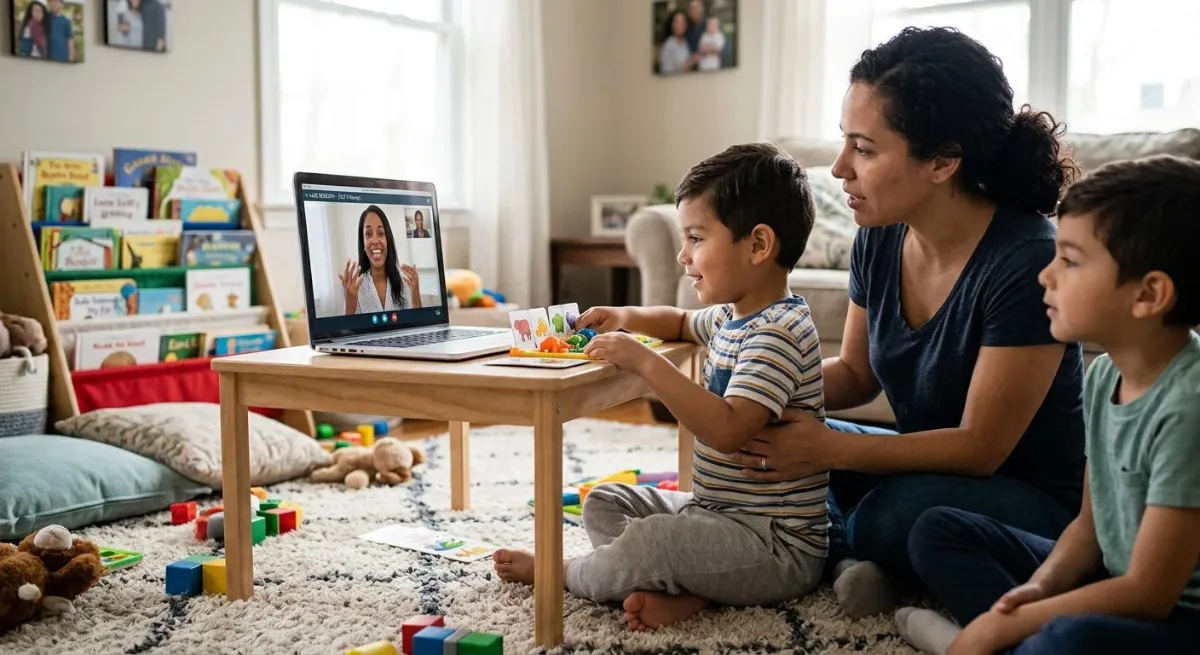
Telehealth speech therapy is particularly effective for autistic children for several important reasons.
- Familiar surroundingsYour child communicates best in familiar environments. Telehealth means therapy happens at home, in their comfort zone, where they’re most themselves. There’s no anxiety about traveling to an unfamiliar clinic, no sensory overwhelm from waiting rooms. Your child is in the environment where they spend most of their time, which means strategies taught in therapy can be practiced immediately and naturally.
- No hard transitionsMany autistic children find the transition to unfamiliar places difficult. Telehealth eliminates that barrier to care. Therapy begins as soon as the session starts — no build-up time needed.
- Flexible schedulingFlexible scheduling is crucial for families with autistic children. Sensory-processing differences, anxiety, and the need for routine mean that families often need flexibility in scheduling. Telehealth allows therapy to happen at times that work for your child’s patterns and your family’s routines.
- Easy access to AACFor non-speaking children who use AAC devices or alternative communication, telehealth allows them to access their communication tools easily. There’s no need to transfer between environments.
- No travelFrom a practical standpoint, it eliminates travel time and gives parents access to specialized expertise regardless of where they live. For families managing the demands of supporting an autistic child, telehealth makes quality support more accessible.
Your role
The Role of Family in Therapy
For autistic children, family involvement is not just helpful — it’s essential. Parents are the primary agents of support and teaching.
The most effective therapy happens when strategies taught in the speech therapy session are practiced throughout the day, in all the natural contexts where your child communicates. This might mean:
- Using AAC language during meals
- Practicing social skills during siblings’ play time
- Teaching communication during preferred activities
A good speech-language pathologist teaches you strategies, helps you understand your child’s communication style, and coaches you on how to support communication throughout your child’s day. You’re not just attending therapy appointments — you’re learning how to support communication in every moment.
Family-centered therapy also recognizes that you know your child better than anyone. You understand what motivates them, what their interests are, and what times of day they’re most able to engage. Therapy is most effective when it builds on that knowledge.
What we believe
Acceptance and Support
Working with an autistic child on communication means balancing two important things: accepting and celebrating how your child’s brain works, while also providing support to help them communicate and connect in ways that matter to them.
Some autistic adults speak positively about this distinction: they wanted support with communication and social skills because those things mattered to them, not because there was something wrong with being autistic. They appreciated therapists and family members who helped them while also accepting their autism.
This means celebrating your child’s interests, honoring their communication style, while also providing support where they need it. It means helping them learn social rules they want to learn, while accepting that they may never make eye contact or have exactly neurotypical social communication.
It means taking their needs seriously — including sensory needs, anxiety, and the real challenges autism can present — while also recognizing that many autistic people thrive, contribute meaningfully to the world, and live fulfilling lives.
At Oasis Speech, our licensed speech-language pathologist provides online speech therapy for autistic children across Texas and Florida. Not sure where to start? Book a free 15-minute consultation, and we’ll talk through your child’s needs and next steps together.
Insurance accepted
Insurance for Autism Speech Therapy in Texas and Florida
In Texas, we accept STAR, STAR Kids, and CHIP plans through UnitedHealthcare Community Plan and BCBS of Texas in certain areas, plus BlueCross BlueShield of Texas, Aetna, and Curative. In Florida, we accept Aetna, UnitedHealthcare, Curative, and Step Up For Students.
In Texas

 Including HealthSelect

 Traditional Texas Medicaid



Medicaid plans vary by county. Check yours with our Texas Medicaid and CHIP plan checker, or see insurance details →
In Florida
 Including Dual Complete
 Step Up For Students
We aren’t in network with Florida Medicaid or Florida KidCare plans right now. We accept HSA/FSA funds and provide superbills for out-of-network reimbursement. See insurance details →
We verify your benefits before the evaluation and tell you what to expect. Self-pay is available in both states. See insurance and pricing →
Getting started
Three steps. No waiting room.
- Free consultationA free 15-minute call. Tell us what you are noticing, and ask anything.
- EvaluationA licensed speech-language pathologist finds out what is going on and writes a plan.
- Sessions at homeLive 25 to 30 minute video sessions, at a time that fits your week.
Google reviews
What families say
Ms. Sherry is so amazing. I was skeptical at first of doing virtual therapy but it has helped my little one so much. He has said many new words with Ms. Sherry’s help. We look forward to each session ☺️
Oasis speech did an amazing job with scheduling and communication for my sons sessions. … she was so patient with him and really had him engaged. thanks oasis speech!
Very professional and helpful with my case and situation
We cannot thank Mrs. Sherry Owais enough for the incredible impact she had on our son. From day one, she created a welcoming and supportive environment that instantly put him at ease. She is highly knowledgeable, patient, and truly cares about her patients. Not only did she help our son make amazing progress with his speech, but she also provided our family with great support and strategies to practice at home. We highly recommend her services to anyone seeking speech therapy!
Questions parents ask
Autism Speech Therapy FAQ
How does speech therapy help autistic children?
Therapy supports communication in the way that works for your child: spoken words, gestures, pictures or a communication device, along with play and social interaction.
What is gestalt language processing?
Some children learn language in chunks or scripts rather than single words. Therapy helps them move from scripts toward flexible, self-generated language.
Can autistic children do speech therapy online?
Many can. Sessions use your child’s interests, and parents are coached to use strategies in daily routines. We confirm fit during a free consultation.
Does my child need an autism diagnosis to start?
No. Therapy is based on communication needs, not a diagnosis.
Can speech therapy help a non-speaking or nonverbal autistic child?
Yes. For non-speaking children, we focus on all forms of communication: gestures, pictures, sign language and AAC devices. We are not waiting for speech to develop. We help your child communicate right now in the ways that work for them.
What is an AAC device, and can it be used in online speech therapy?
AAC stands for augmentative and alternative communication: tools such as pictures or a communication device that let a child express themselves without relying on speech. With telehealth, children use their AAC tools at home, so there is no need to transfer between environments.
What are the goals of speech therapy for autism?
Goals are set for each child. They might include teaching social skills, expanding language, reducing anxiety around communication, or developing strategies that play to your child’s strengths. The goal is never to make a child less autistic.
Every Voice Deserves to Be Heard
Book a free 15-minute consultation with a licensed speech-language pathologist. No obligation.