

Speech Delay Therapy
Telehealth speech therapy for late talkers and toddlers with speech delays across Florida and Texas.
Your 18-month-old is a late talker, saying only a few words while other toddlers seem to be forming sentences. Your 2-year-old understands everything you say but rarely speaks. Or maybe your 3-year-old talks, but nobody outside the family can understand them.
You're wondering: Is this normal? Should I be worried? When should I call someone?
If you're asking these questions, you're not alone. Speech delays are one of the most common developmental concerns parents bring to their pediatrician. The good news? Early intervention works. And getting answers is simpler than you might think.
What Is a Speech Delay?
A speech delay means your child is developing speech and language skills, but at a slower pace than expected for their age. This is different from a disorder — a delay means they're on the developmental path, just not moving along it at the typical speed.
Speech delays can involve one or more areas. Your child might understand language well but not be speaking (receptive language is fine, but expressive language is delayed). Or they might both understand and produce speech but are doing so slower than peers. They might have some words but not as many as expected. Or they might be difficult to understand — their words are there, but the sounds aren't clear.
The key thing to understand is that speech delays are common, often very treatable, and early help makes a real difference.
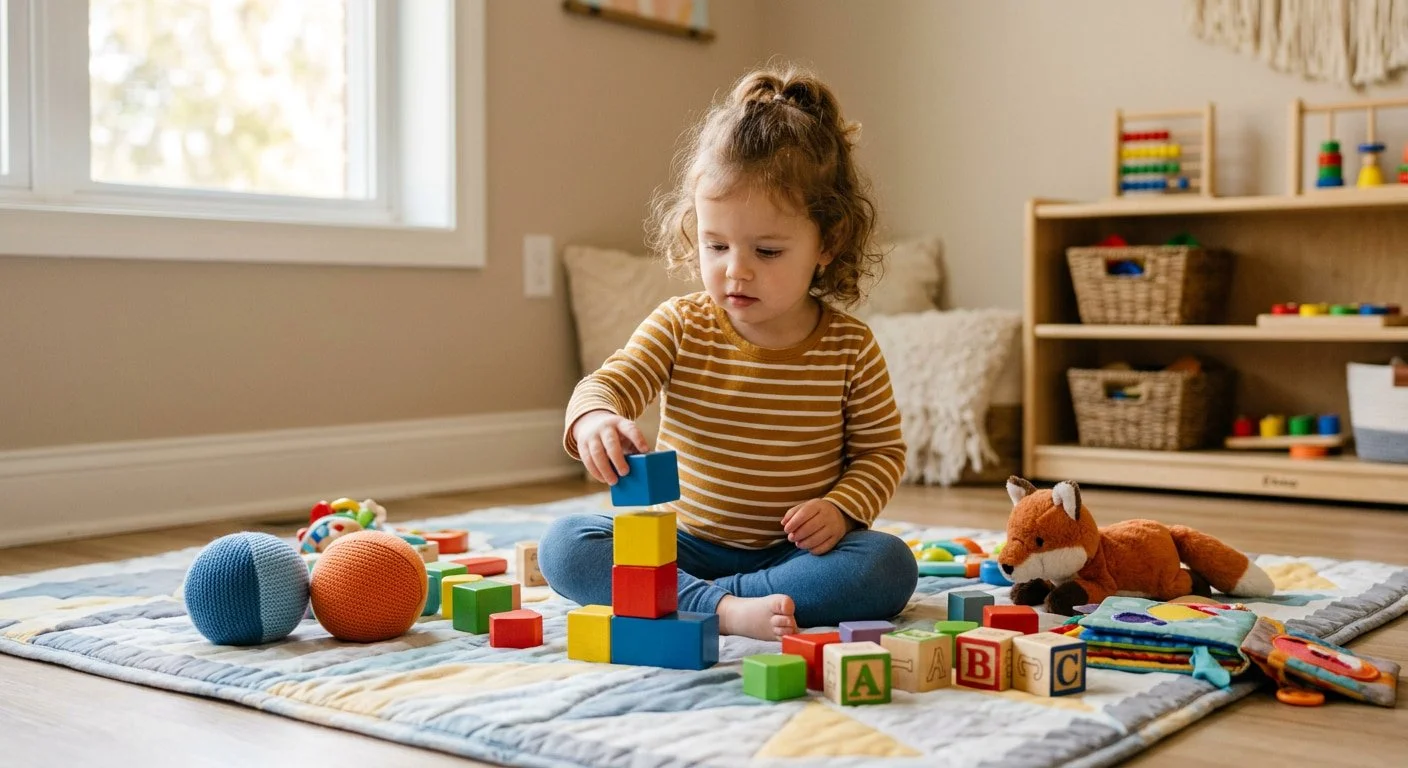
Why Does Speech Delay Happen?
Speech delays can have many different causes, and sometimes there's no single clear reason.
Some speech delays run in families. If you or your partner talked later as a child, or if there's a family history of speech or language differences, your child is more likely to have a delay too. This doesn't mean something is wrong — it's just a pattern you'll see.
Hearing loss, even partial, can delay speech development. If your child isn't hearing words clearly, they can't learn to produce them clearly. Ear infections, especially frequent ones early in development, can affect speech learning. If hearing is a concern, your pediatrician can refer you for a hearing test.
Limited language exposure can contribute to delays. Children learn language from the people around them. If your child spends most of their time with just one caregiver, or if family members don't talk to the child often, language development may slow.
Developmental differences like autism, cerebral palsy, Down syndrome, or other conditions can affect speech development. In these cases, speech delay is often one of several developmental concerns.
Selective mutism, where a child speaks comfortably in some settings (like at home) but is unable to speak in others (like at school) due to anxiety, can look like a speech delay but is actually a different type of concern.
Sometimes, there's no clear cause. Your child is developing normally in every way except their speech is slower. This is common, especially in late talkers under age 2, many of whom catch up on their own.
Red Flags: When to Seek an Evaluation
Not all children talk on the same timeline, and some catch up without help. But certain signs suggest an evaluation is worth pursuing.
By 12 months, your child should be babbling (saying sounds like "baba" or "dada"), responding to their name, and using gestures like waving or pointing. If your child isn't doing these things, an early evaluation can help.
By 18 months, children typically have some words — even just a few. "Mama," "dada," or other meaningful sounds. They understand simple words and instructions. If your child has fewer than 10 words or isn't understanding simple language, an evaluation is worth considering.
By 2 years, most children have at least 50 words and are combining words into two-word phrases like "more milk" or "daddy up." They follow simple directions and show interest in communicating. If your child isn't doing these things by 2, or if they had words and then lost them, this is a clear signal to reach out to a professional.
By 2.5 to 3 years, speech should be becoming clearer. Others can understand much of what your child says. Your child can follow two-step directions and uses language to interact with you. If your child's speech is still very hard to understand, or if they're not combining words yet, evaluation is helpful.
At any age, if you notice your child losing skills they once had — words they used to say, skills that were developing — this is always worth investigating. Regression can signal various things that need professional attention.
Trust your gut. If something feels off to you, and especially if relatives or teachers have mentioned concerns about your child's speech, an evaluation provides answers and peace of mind.
What Happens During a Speech Evaluation
A speech evaluation is simply a way to understand what's happening with your child's speech and language development. It's not stressful — most of it looks like play.
Your speech-language pathologist will start with questions about your child's history. When did your child say their first word? Do they have ear infections? Is there family history of speech delays? How does your child communicate at home?
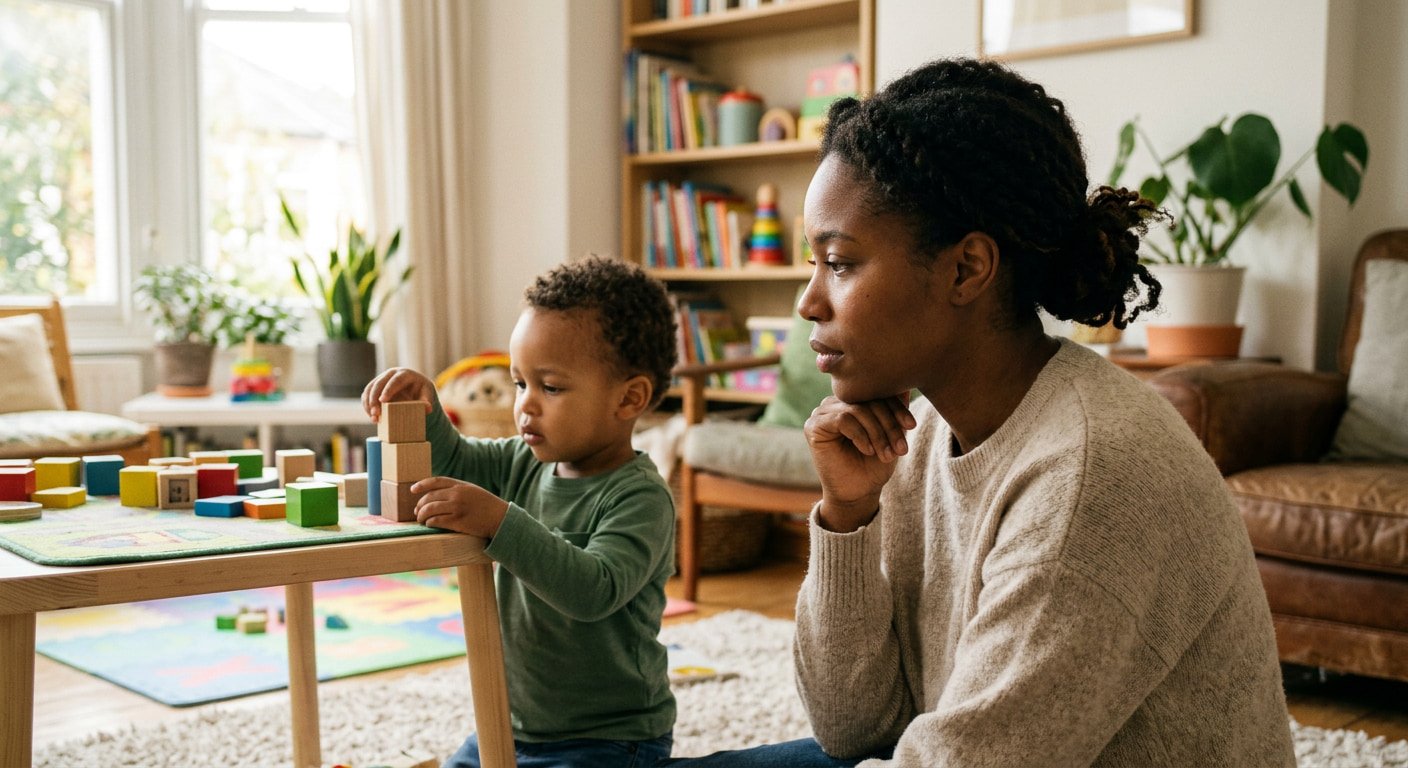
Then the SLP will play with your child in age-appropriate activities. They might stack blocks, read a book, play with toys, or engage in activities that naturally bring out communication. This is casual and natural — your child doesn't feel like they're being tested.
The SLP will use standardized assessments designed for your child's age. These are researched tools that measure speech and language skills in ways that are reliable and fair.
After the evaluation, you'll get a detailed report. It explains what your child's strengths are, what areas are delayed, and whether speech therapy is recommended. If therapy is recommended, the report explains what therapy will focus on, …how often sessions should take place, and what you can do at home.
Early Intervention: Why It Matters
Early intervention is one of the most important concepts in speech development. It means getting help sooner rather than later, and the research is clear: it works.
When children receive speech therapy early, they have a greater chance of catching up to peers. The brain is most plastic — most able to learn and change — in the early years. Therapy during these years takes advantage of this incredible capacity. Early intervention often means therapy is more efficient and effective.
Read more in our guide to why early intervention matters before age 3.
How Long Does Speech Therapy Take?
This is one of the most common questions parents ask, and the honest answer is: it depends on your child and the nature of the delay.
Some children catch up quickly — within a few months of starting therapy, they're on track with peers. This is especially true for younger children (under 3) and those with mild delays.
Other children need ongoing therapy over months or years. This is more common for children with underlying conditions like autism or developmental delays that affect multiple areas, or for children whose delays are more significant.
Your speech-language pathologist will give you a better estimate after the evaluation. They'll tell you what they expect based on your child's age, the severity of the delay, and the cause.
What matters most is consistency and frequency. Two sessions per week often work better than one per month. And therapy at home — with you practicing strategies throughout the week — makes a bigger difference than therapy alone.
How Telehealth Speech Therapy Helps Late Talkers
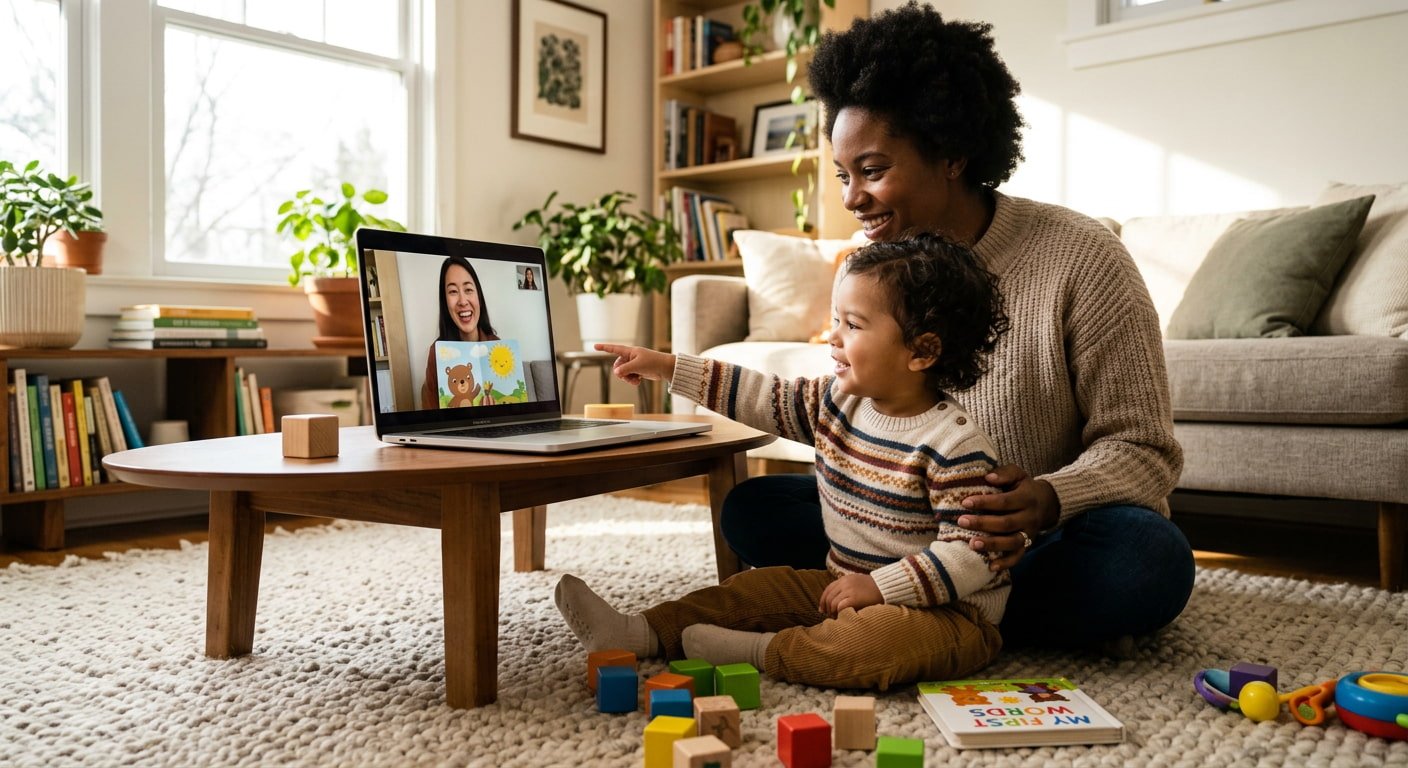
At Oasis Speech, our licensed speech-language pathologist provides online speech therapy for toddlers and children with speech delays across Florida and Texas. Sessions happen through secure, HIPAA-compliant video from the comfort of home — where your child already feels relaxed and ready to talk.
Telehealth also puts you right beside your child during every session. You'll see the exact strategies we use, so you can practice them at home throughout the week. For young children with speech delays, parent involvement is one of the biggest drivers of progress.
Not sure if your child needs help? Book a free 15-minute consultation, and we'll talk through your concerns and next steps together.
What You Can Do at Home
You don't need special materials or training to support your child's speech development. You're already doing most of what matters.
Talk to your child throughout the day. Narrate what you're doing: "Now we're putting on your shoes." "We're eating lunch." This constant language exposure is powerful. Your child learns by hearing language used naturally in context.
Read books together every day. Point to pictures, ask questions, let your child turn pages. Books introduce new words and ideas in a fun, engaging way.
Follow your child's lead. If your child is interested in trucks, talk about trucks. If they want to play with blocks, talk about what you're building. Learning happens when your child is engaged and interested.
Expand on what your child says. If your child says "dog," you say "Yes, that's a big dog! The dog is running." You're modeling how to say more while respecting what your child contributed.
Ask questions that invite communication. "What's that?" "Where did the ball go?" "What do you want?" These open-ended questions encourage your child to use language.
Play together. Silly games, peek-a-boo, singing songs — these aren't just fun; they're language learning. Your child learns through play and enjoyment.
Limit screen time. Children learn language from people, not from screens. Real interaction is what builds language skills.